
The upcoming elections in Hungary could mark a major political shift, with a real possibility that Prime Minister Viktor Orbán may lose power after more than 16 years in office.
According to analysis by journalist Rob Cameron, recent polls show a clear lead for challenger Péter Magyar, with a margin ranging between 10 and 20 percentage points—raising expectations of a political change in Budapest.
Cameron notes that the political system built by Orbán—often described as an “illiberal democracy”—is now facing its most serious challenge since he came to power. Signs of “political desperation” are reportedly visible within the ruling camp, including intensified international engagement and last-minute efforts to mobilize external support.
In this context, the visit of U.S. Vice President JD Vance to Budapest is seen as part of efforts to bolster Orbán’s position ahead of the vote.
The analysis also highlights the Hungarian government’s close political ties with the Kremlin, citing investigative reports pointing to deepening cooperation between Budapest and Russia. It further references concerns about Russian influence shaping political and security narratives in Central Europe.
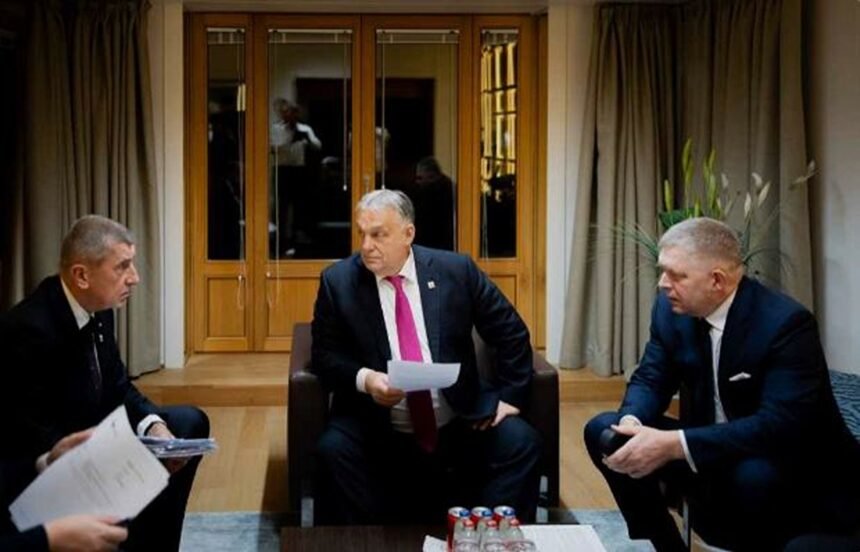
A potential political shift in Hungary could have broader regional consequences, particularly for Slovakia and Czech Republic, where leaders such as Robert Fico and Andrej Babiš are closely watching developments in Budapest.
Experts warn of a possible “political pendulum” effect in the region, with governments alternating between pro-European forces and more populist or eurosceptic movements.
Orbán has not only been a national figure but also a political and financial supporter of conservative and populist networks across the region. Analysts suggest that his potential defeat would significantly weaken this network and alter the balance within the European Union.
Impact on Serbia and Vučić
In this regional context, one key dimension is the impact on Serbia.
Orbán has long been considered one of the closest allies of Serbian President Aleksandar Vučić within the EU, often supporting Belgrade’s positions on regional issues and its stance toward Kosovo.
According to the analysis, a weakening or departure of Orbán from power would be a direct blow to Vučić’s diplomatic position in Brussels, removing one of his strongest supportive voices within the EU.
Cameron concludes that the Hungarian elections are not merely a domestic political contest, but a moment with far-reaching implications for Central Europe and the Balkans—potentially reshaping alliances that have long supported Orbán’s policies and his regional partners, including Belgrade.