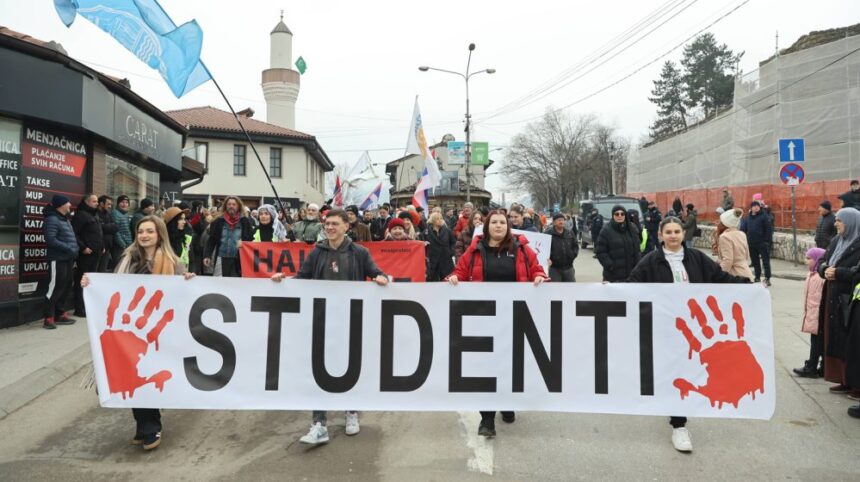
The student initiative “Sign for Victory” has proven successful, gathering nearly 400,000 signatures in support of early elections, according to academic and Chemistry Professor Radomir Saičić.
“The general perception is that this is a significant number. It was evident during the collection process, as the authorities were already uneasy and tried to downplay the results,” Saičić told N1.
The campaign, organized by students on December 28, collected 393,045 signatures, showing widespread public willingness to respond to student-led initiatives.
“About 400,000 signatures in one day demonstrates that people are ready to answer a student call. Some may think attention is waning, but when action is taken, the public is willing to engage,” he emphasized.
Saičić noted that while the number is significant, the campaign might not have been fully promoted, yet the turnout shows the potential for even greater mobilization in pivotal moments. The initiative also played a key role in networking citizens who support democratic change.
“People were willing to provide their full personal details – name, surname, address, email. The campaign will continue in some areas, so there will be more,” he added.
Regarding attempts by government officials to discredit the campaign, Saičić stated that authorities often deny reality and twist facts. He praised the peaceful and persistent efforts of students and citizens to push for change, despite biased official reporting.
When asked about the government’s reaction to the student initiative, Saičić said: “They are certainly not happy. The campaign showed that the authorities cannot meet the students’ demands, and students are calling for leadership that will.”
On the possibility of a peaceful change in government, he noted that it depends on the regime’s response. “Elections will take place on the legally determined date. Students and citizens are doing everything to ensure a civil transfer of power. But if the government delays, pressure grows.”
Saičić also criticized media coverage of the so-called “Ćacilend” settlement near the Serbian parliament, calling it a series of absurdities and a government response to student protests. He described it as a propaganda tool rather than a genuine initiative, emphasizing that the issue must be resolved in a civilized manner.