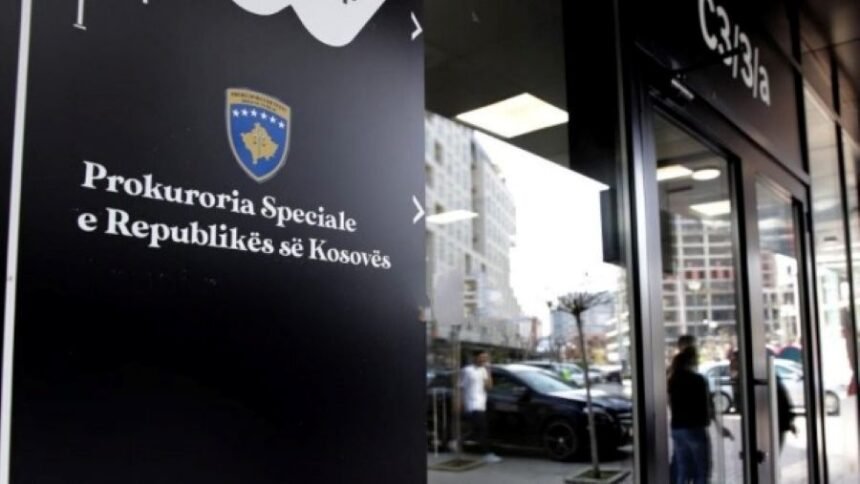
Prosecutors in Kosovo have requested pre-trial detention for a former member of Serbia’s Interior Ministry (MUP), identified only as A.D., on suspicion of committing war crimes against civilians during the 1998–1999 war.
According to the Special Prosecution of Kosovo, the suspect was arrested a day earlier and is believed to have served as a Serbian police officer in Ferizaj and the Kaçanik region at the time of the alleged crimes. The Basic Court in Pristina is now expected to decide on the detention request.
Prosecutors allege that on March 9, 1999, in the village of Ivajë and surrounding areas, the suspect acted in coordination with other Serbian police and military forces in an operation targeting Albanian civilians. During the operation, residents were forcibly expelled from their homes, which were then burned and destroyed.
He is also suspected of participating in the brutal physical and psychological abuse of 13 civilians during interrogations at the Kaçanik police station, causing serious bodily injuries. These individuals were among 91 men separated from a larger group of around 400 civilians.
The arrest has triggered a reaction from Serbian authorities. The Office for Kosovo and Metohija described the detention as “politically motivated,” stating that the suspect is a retired police officer from the Prizren region.
This case comes shortly after a court in Prishtina convicted two former Serbian police and military members. Zoran Kostić was sentenced to 15 years in prison, while Dragan Milović received a 7-year sentence for crimes committed during the same conflict.
The war in Kosovo left over 13,000 civilians dead—most of them ethnic Albanians—while thousands remain missing. More than 1,500 people are still unaccounted for.
War crimes investigations in Kosovo were initially handled by United Nations Interim Administration Mission in Kosovo and later by European Union Rule of Law Mission in Kosovo, before being transferred to local judicial institutions in 2018.
In recent years, Kosovo authorities have intensified efforts to prosecute war crimes cases, leading to new arrests and indictments.