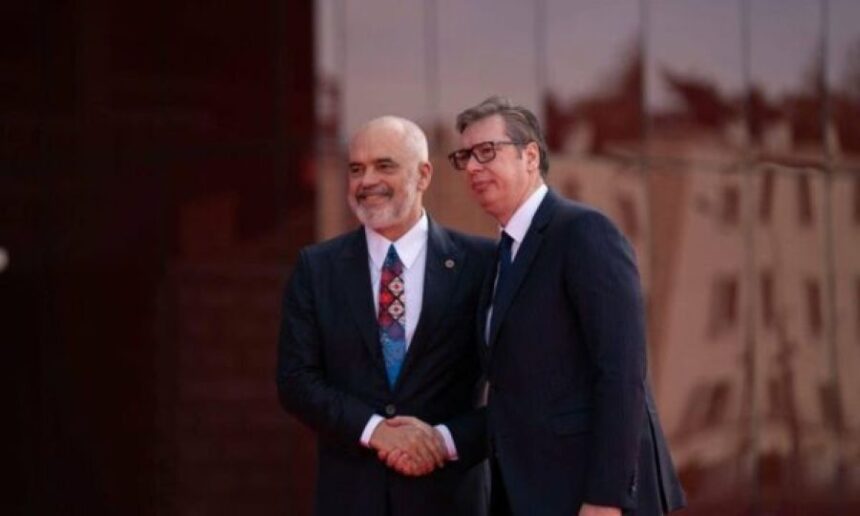
In a joint editorial for Frankfurter Allgemeine Zeitung (FAZ), Albanian Prime Minister Edi Rama and Serbian President Aleksandar Vučić proposed that their countries and other Western Balkan states should gain access to the European Union’s Common Market and Schengen Area, while full EU membership could be deferred for a later stage.
The editorial, analyzed by German journalist Michael Martens, emphasizes a pragmatic approach: instead of insisting on full EU accession, the leaders support incremental integration that could deliver tangible benefits for citizens and strengthen the economic and geopolitical position of the EU.
“We recognize that Europe faces two equally legitimate objectives today: candidate countries seek a realistic path to full membership, while member states aim to preserve the EU’s effectiveness and unity. This tension should not result in winners and losers,” Rama and Vučić wrote.
The proposal is framed as a strategic compromise, allowing prepared candidate countries to join the Common Market and Schengen without triggering institutional obstacles such as veto powers, additional commissioners, or changes in voting structures.
According to Martens, the initiative could break the decade-long stagnation of EU enlargement, providing a pathway forward while addressing the concerns of hesitant member states. He notes that the idea itself predates Rama and Vučić, but they are the first high-profile politicians to publicly and clearly endorse it.
The editorial also points out that such a step would benefit both the Western Balkans and the EU: candidate countries would gain economic opportunities and political influence, while the EU could strengthen its strategic depth, political cohesion, and regional stability.
Observers note, however, that neither Albania nor Serbia — nor other candidate countries like Montenegro — currently meet all criteria for Schengen or Common Market access. Nonetheless, the discussion could spark an overdue debate on practical enlargement steps, potentially reviving momentum in a process that has largely stalled since Croatia’s accession nearly 13 years ago.
Rama and Vučić conclude that incremental integration is a realistic, mutually beneficial approach, offering candidate countries a practical foothold in Europe while avoiding political deadlocks associated with full membership.