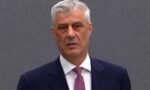
Albanian Prime Minister Edi Rama has strongly criticized the request by the Hague-based prosecution seeking 45-year prison sentences for former Kosovo President Hashim Thaçi and three other former leaders of the Kosovo Liberation Army (KLA): Kadri Veseli, Jakup Krasniqi, and Rexhep Selimi.
Speaking in his weekly podcast segment “Shënimet e Javës,” Rama described the prosecution’s request as “madness, shamelessness, and cruelty,” arguing that it contradicts fundamental principles of international law.
“It took me — and still takes me — time to understand how something like this, such madness, such shamelessness, such cruelty, can even be addressed with words,” Rama said. “The request for 45 years in prison for the four most significant figures of the Liberation War was a bomb thrown at the people and the Republic of Kosovo.”
According to Rama, after six years of investigations, the prosecution has failed to produce concrete evidence to substantiate allegations of crimes against humanity and war crimes during 1998–1999. He argued that no international law allows convictions based solely on such claims without clear proof of an organized plan and structure aimed at targeting civilians.
Rama further emphasized that there is no legal basis in international law to convict a leader of a liberation war solely for holding a leadership role, without proof that they ordered attacks on civilians or exercised effective control over all armed formations.
He accused the Hague-based court referring to the Kosovo Specialist Chambers and the states supporting it of staging what he called a “masquerade” that shames Western democracies.
“This is not just a disgrace for a few prosecutors,” Rama stated. “It is a disgrace for the states that support that court, that fund it, that pay extraordinary salaries to people involved in such a farce.”
The prosecution’s request marks a significant moment in the ongoing trial process, drawing sharp political reactions in Albania and Kosovo and reigniting debates over accountability, justice, and the legacy of the Kosovo Liberation War.