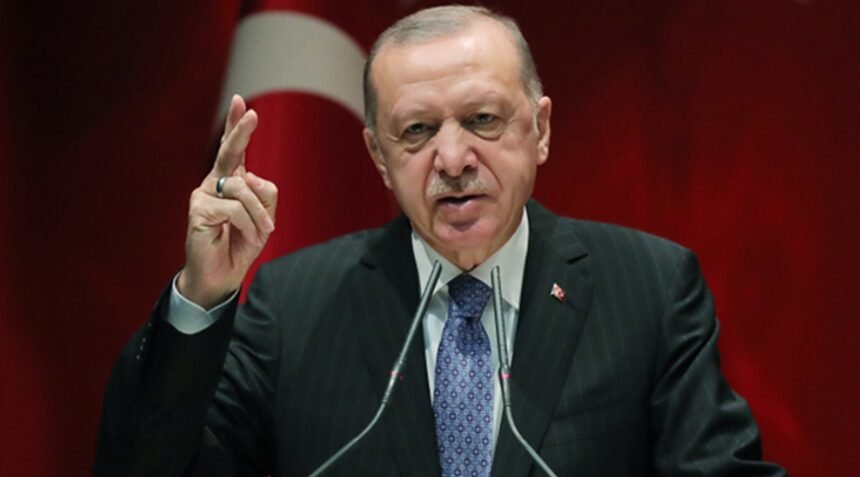
Turkish President Recep Tayyip Erdoğan has said that membership in the European Union is no longer a priority for Ankara, signaling a significant shift from the European integration agenda that played a central role during the early years of his government.
Speaking to Al Jazeera Arabic, Erdoğan said Turkey had been seeking EU membership for decades but suggested that Ankara would not consider rejection by the bloc a major setback.
“Europe has not accepted Turkey for 53 years and does not seem to be considering such a possibility in the near future, but we have not closed the door. We still think about EU membership. If they accept us, fine. If they do not, even better. The European Union is not our priority,” Erdoğan said.
He argued that if Turkey were ultimately denied membership, the consequences would be felt more by the European Union than by Turkey.
The remarks mark a notable departure from Erdoğan’s previous characterization of EU membership as a strategic objective. In June 2024, during a meeting with Estonian President Alar Karis, Erdoğan described full EU membership as a “strategic objective” for Turkey.
The ruling Justice and Development Party (AKP), which came to power in 2002, initially placed European integration at the center of its political program. Reforms implemented during the early years of Erdoğan’s government helped Turkey open formal EU accession negotiations in 2005.
Turkey applied for full membership in 1987 and was granted candidate status in 1999. However, accession negotiations have remained effectively stalled for years.
The European Commission has repeatedly raised concerns over developments in Turkey concerning democratic standards, judicial independence, the rule of law and fundamental rights, contributing to the prolonged deadlock in the accession process.
Erdoğan’s latest comments come as Turkey continues to balance its longstanding ties with Europe with an increasingly independent foreign-policy approach, while maintaining strategic relations with both Western allies and other major global powers.