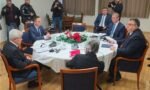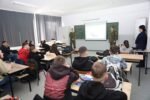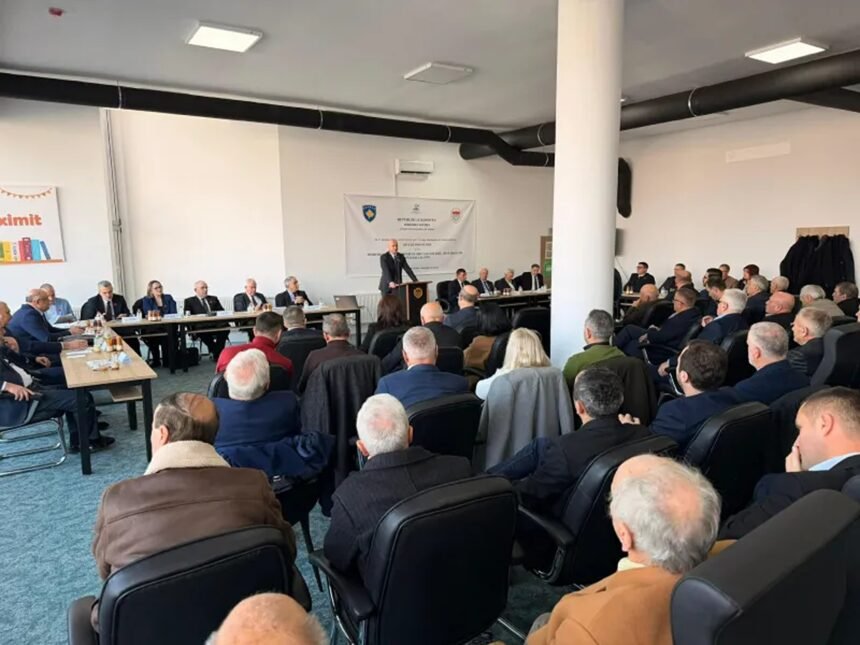
The denial of Serbian crimes in Kosovo represents a direct threat to the future, speakers said on the 27th anniversary of the Reçak massacre, during a scientific roundtable organized by the Forum of Intellectuals in Shtime. The discussion focused on the topic “Serbian denial of crimes and genocide as a destabilizing factor for the Balkans.”
The Mayor of Shtime, Qemajl Aliu, stated that the Reçak massacre marked a major turning point in Kosovo’s history. Among more than 400 massacres committed by Serbia, he emphasized that Reçak was the one that received international condemnation.
“The Reçak massacre was not necessarily the largest or the bloodiest—there were others such as Izbica, Meja, and Rahovec—but Reçak has its own role in the recent history of the Republic of Kosovo, of our state. Thanks to one man, Ambassador William Walker, who on January 15, 1999, as part of an international mission, came to the site and denounced the barbaric crime of Milošević, it became a major historical turning point. This mobilized the international community, led to the Rambouillet Conference, and after Serbia refused to sign the agreement, NATO bombing began. For 78 days, the criminal state of that time was bombed, while NATO acted from the air and the best sons and daughters of the nation fought on the ground. Alongside diplomacy and the extraordinary role of the Albanian state, this led to our freedom on June 12, 1999, and later to our independent state and Republic, which we jointly enjoy today… Two years ago, following the Jashari memorial, the Reçak Memorial was declared a national project, and the state will ensure investments here and the protection and archiving of all details of the Serbian crime against civilians,” Aliu said.
He also mentioned the indictment filed late last year by the Special Prosecution, charging 21 Serbian war criminals.
The head of the Forum of Intellectuals in Shtime, Banush Imeri, said Reçak remains one of the deepest wounds in Kosovo’s history.
“The Reçak massacre is one of many committed by Serbia, but it became a symbol. Today, January 14, we are holding this roundtable ahead of the commemorative academy for the Reçak massacre, aiming through professional analysis to further illuminate its dimensions and its importance for Kosovo’s identity and collective memory,” he said.
Addressing the continued denial of the massacre by senior Serbian officials, Albania’s Ambassador to Kosovo, Petrit Malaj, said such denial constitutes a direct threat to the future.
“The denial of Serbian crimes in Kosovo is not merely a denial of the past—it is a direct threat to the future. It undermines justice, obstructs sincere reconciliation, and sustains tensions that endanger regional stability. Without justice and accountability, there can be no lasting peace. That is why the role of academia, researchers, institutions, and diplomacy remains essential today: to defend historical truth, counter denialist narratives, and remind the international community that justice for the victims is not a matter of the past, but an obligation of the present,” Malaj concluded.
On January 15, 1999, Serbian forces brutally killed 45 Albanian civilians in the village of Reçak, in the municipality of Shtime. The first to inform the world that a crime against humanity had been committed was William Walker, then head of the OSCE Kosovo Verification Mission. The massacre prompted strong international reactions, leading NATO to launch air strikes against Serbian military and police targets.