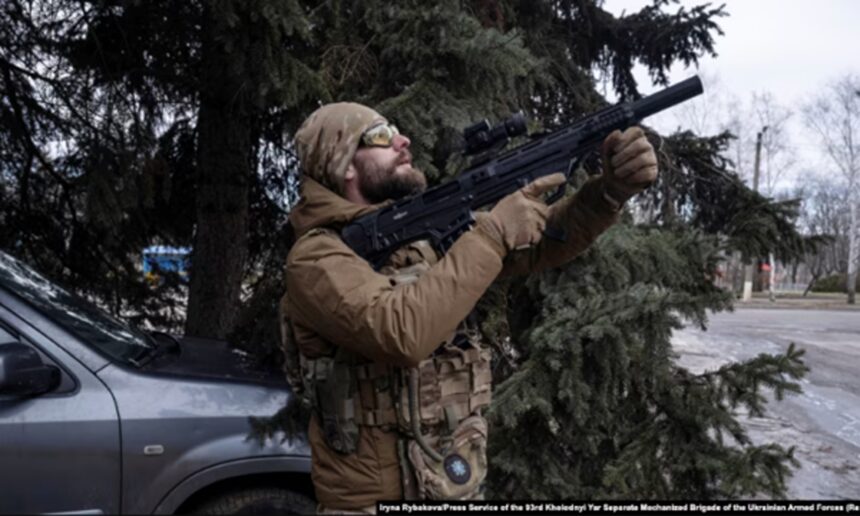
Ukraine and Russia have exchanged large-scale drone attacks, each deploying more than 200 drones, following talks between the United States and Ukraine in Florida, where a potential prisoner exchange between Russia and Ukraine was also discussed.
Russia’s Defense Forces said they intercepted and destroyed 249 Ukrainian drones overnight, marking one of the largest drone assaults by Ukraine, which has intensified strikes on Russia’s energy targets.
Meanwhile, Ukraine’s Air Force reported that Russian forces launched 251 attack drones during the same period.
In Ukraine, Russian drones struck residential areas and port infrastructure in the southern Odesa region along the Black Sea, according to the regional governor. At least four people were injured in Kryvyi Rih, a major industrial city in central Ukraine, while fires and infrastructure damage were reported.
In Russia, a drone strike caused a fire at a fuel storage tank in the port of Primorsk on the Baltic Sea, the country’s largest western oil export hub, according to Aleksandr Drozdenko. More than 70 drones were destroyed in the region over the past 24 hours, he wrote on Telegram.
The port of Primorsk, with an export capacity of over 1 million barrels of crude oil per day, is a key outlet for Russian oil. It has been targeted before, including in September 2025, when operations were temporarily halted following a Ukrainian strike.
Ukraine continues targeting Russian energy infrastructure, including oil export facilities and refineries, aiming to weaken Moscow’s war economy.
US–Ukraine talks in Florida
Ukraine’s negotiating team met with U.S. representatives in Florida for two days of talks on March 21–22.
The U.S. delegation included special envoy Steve Witkoff, Jared Kushner, and senior White House adviser Josh Gruenbaum. The Ukrainian delegation included Rustem Umerov, Kyrylo Budanov, David Arakhamia, and Serhiy Kyslytsya.
According to both sides, discussions focused on long-term security guarantees for Ukraine and humanitarian efforts, including further potential prisoner exchanges.
“There are signals that more exchanges may be possible, and this would be good news and confirmation that diplomacy is working,” said Ukrainian President Volodymyr Zelensky in his evening address on March 22.
Witkoff described the talks as “productive,” adding that they focused on key elements for establishing a sustainable and reliable security framework for Ukraine.
Ukraine’s chief negotiator, Rustem Umerov, reported that “progress” had been made in aligning positions on unresolved issues with the U.S. side.
Last week, a key Kremlin envoy, Kirill Dmitriev, also traveled to Florida to meet U.S. officials, describing the talks as “productive.”
The Kremlin said on March 19 that trilateral talks between Washington, Moscow, and Kyiv on ending the war in Ukraine are currently on “pause” following the outbreak of war involving Iran.
“This is a situational pause, for obvious reasons,” Kremlin spokesperson Dmitry Peskov told reporters, adding that Moscow hopes talks will resume once “our American partners” can refocus on Ukraine.