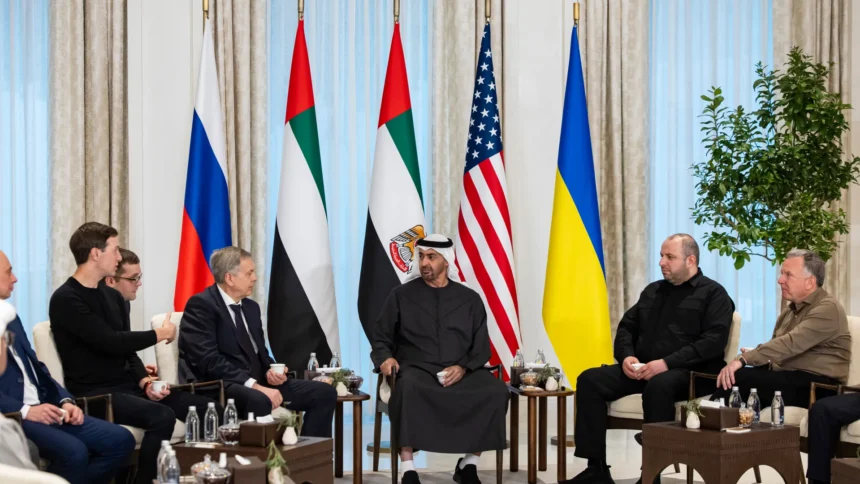
Representatives from Russia, Ukraine, and the United States are meeting in Abu Dhabi today for the second round of trilateral negotiations, marking a rare diplomatic effort that brings Moscow and Kyiv together under U.S. mediation.
The diplomatic process aims to explore potential solutions to the nearly four-year-long war, although tensions remain extremely high.
The second round of talks follows a renewed escalation in military attacks, with Russia launching massive strikes targeting Ukraine’s energy infrastructure on Tuesday. According to reports, more than 500 drones and missiles were deployed, leaving Kyiv without heating during temperatures reaching -20°C.
Ukraine responded early Wednesday with retaliatory strikes on infrastructure in Russia’s Belgorod region, reportedly causing major power outages in parts of the border area.
Following these developments, Ukrainian President Volodymyr Zelenskyy warned of a possible review of Kyiv’s positions, though he did not provide specific details.
At the center of today’s negotiations are the most sensitive elements of the U.S. peace framework, including proposals for a “freeze” of the current front lines and the establishment of long-term security guarantees for Ukraine.
Despite optimistic signals from U.S. President Donald Trump, negotiations remain deadlocked over territorial disputes. Russia continues to demand the full withdrawal of Ukrainian forces from the Donbas region, while Ukraine firmly rejects any territorial concessions.
Kyiv has indicated openness to a proposal whereby the United States and European countries would serve as security guarantors following any peace agreement. The plan reportedly includes the creation of a rapid response military force that could intervene in Ukraine’s defense within at least 24 hours in the event of renewed Russian aggression.