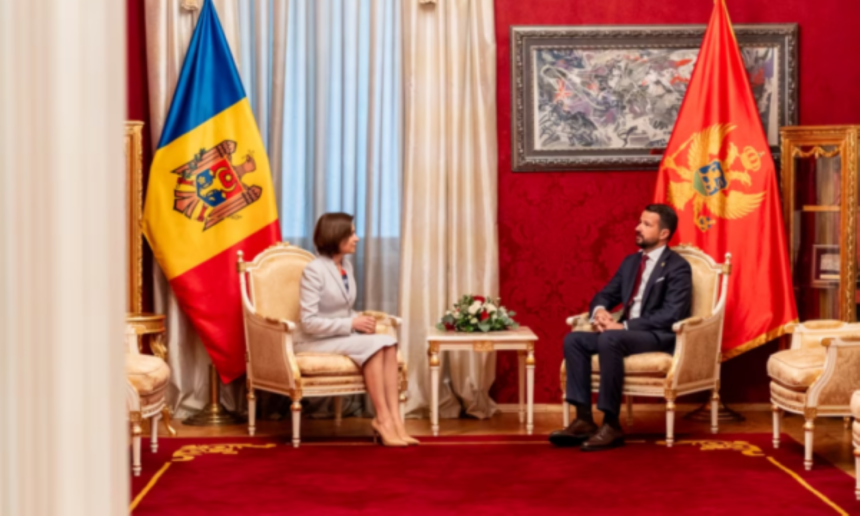
Wherever there is room for destabilization, Russia exploits it, says Drashko Jabučanin, analyst at the Digital Forensics Center (DFC) in Montenegro, in an interview with Radio Free Europe/Radio Liberty.
The DFC’s latest analysis highlights Russia’s strategy toward countries at different stages of Euro-Atlantic integration, noting particularly the parallels between Montenegro and Moldova.
“The Western Balkans and Moldova serve the same purpose in Russia’s destabilization strategy: to show the West that the levers of power and influence remain in Kremlin hands, despite sanctions and political isolation,” Jabučanin explained.
Russia has been under international sanctions for almost four years since its invasion of neighboring Ukraine.
Methods of Influence
According to DFC, regardless of the target country over the past decade, Moscow has consistently used the same tools to influence democratic processes, particularly through disinformation campaigns, religious organizations, and intelligence services.
The Russian embassy in Montenegro did not respond to questions about whether its goal is to weaken Montenegro’s pro-European course, undermine institutions, or create political instability. Recently, the Russian ambassador accused authorities of hostility toward Moscow.
Electoral Parallels: Moldova 2025 and Montenegro 2016
In Moldova, the September 2025 parliamentary elections were pivotal in choosing between Brussels and Moscow. Authorities arrested dozens of individuals suspected of preparing mass unrest, many of whom had been trained in Serbia. Investigations revealed that Russian security services had organized a training camp in Serbia under the guise of a religious pilgrimage, teaching participants riot tactics, breaking police cordons, and handling weapons.
The operation’s goal was reportedly to spark chaos if pro-European parties won. Ultimately, the pro-European party led by President Maia Sandu won decisively.
DFC notes striking similarities with Montenegro in 2016, when defendants aimed to provoke riots on election day to prevent Montenegro’s NATO accession. Russian agents Eduard Shishmakov and Vladimir Popov, along with eight Serbian and three Montenegrin citizens, were accused of organizing the operation.
“In both cases, Serbia served as the main hub for GRU pre-intelligence operations,” the DFC emphasized. Evidence in Montenegro included photos, recordings, uniforms, direct confessions, and €125,000 in seized funds.
The “Moldovan Scenario” in Montenegro
DFC warns that since 2020, conditions in Montenegro have been forming for a potentially Moldovan-style scenario, aimed at weakening the pro-European course and creating political instability favorable to Russian interests.
This includes instrumentalizing pro-Russian parties, infiltrating religious communities, conducting propaganda campaigns via pro-Russian media and social networks, and exacerbating social and ethnic divisions.
In 2020, the Democratic Party of Socialists, led by Milo Đukanović, lost power after 30 years, replaced by a coalition of pro-Serbian and pro-Russian parties.
Religious Influence
In Moldova, Orthodox priests played a key role in spreading anti-European propaganda, funded by Russia and using channels like Telegram to warn against European integration.
Similarly, the Serbian Orthodox Church (KOS) in Montenegro has significant mobilization power, acting as a key intermediary for Russian influence, according to DFC. Ahead of local elections in Kotor and Podgorica in 2024, priests highlighted the role of faith, people, and saints, indirectly supporting pro-Serbian and pro-Russian parties.
The Montenegrin Serbian Orthodox Church denied these claims, calling them “false and malicious” and stating the Church has not engaged in electoral campaigns.
State Institutions: Key to Countering Russian Influence
Drashko Jabučanin emphasizes that Montenegro’s institutions play a vital role in preventing Kremlin interference.
“Institutions must act proactively against attempts at destabilization and influence operations on public opinion. Strategic communication should highlight the importance of European integration and expose the motives of third-party actors seeking to stop it.”
The European Commission recently recommended that Montenegro strengthen its efforts to counter foreign interference and disinformation. To build resilience against hybrid threats, it proposed a strategy and action plan.
Montenegro is currently close to EU membership, having opened all 33 chapters and closed seven. The government aims to complete all negotiations by the end of next year and join the EU in 2028, with regular parliamentary elections scheduled a year prior.