The city authorities of Sarajevo have approved the hiring of a lawyer to participate in a legal case in Milan related to alleged sniper attacks on civilians during the 1990s siege of the Bosnian capital.
The decision was adopted on February 25 by the City Council, authorizing the mayor to engage attorney Nicola Brigida, according to a statement from the city administration.
City to Join Criminal Proceedings in Italy
With this move, the mayor’s office and the City Attorney’s Office will begin preparations to formally join the criminal proceedings currently being handled by Italian judicial authorities.
Officials said the city plans to collect data and documentation on Sarajevo residents who were killed by sniper fire during the siege, including:
- Identification details of victims
- Circumstances surrounding their deaths
- Testimonies and witness accounts
Authorities stressed that the goal is to protect the dignity of the victims, help establish individual criminal responsibility, and contribute to international efforts to prosecute war crimes.
Investigation Triggered by Allegations of Foreign ‘Sniper Tourists’
The case in Italy emerged after reports in Italian media in November 2025 that prosecutors in Milan opened an investigation following a complaint by writer and journalist Ezio Gavazzeni.
He alleged that some individuals paid money to visit positions of the Bosnian Serb Army around Sarajevo during the war and shoot at civilians with sniper rifles.
Italian authorities are currently investigating an 80-year-old Italian citizen, a former truck driver from the province of Pordenone, who was questioned on February 9 as part of the inquiry.
Parallel Case Opened in Bosnia and Herzegovina
At the same time, prosecutors in Bosnia and Herzegovina have also opened a case related to the allegations of so-called “weekend snipers,” according to the Special Department for War Crimes of the state prosecutor’s office.
Legacy of the Siege of Sarajevo
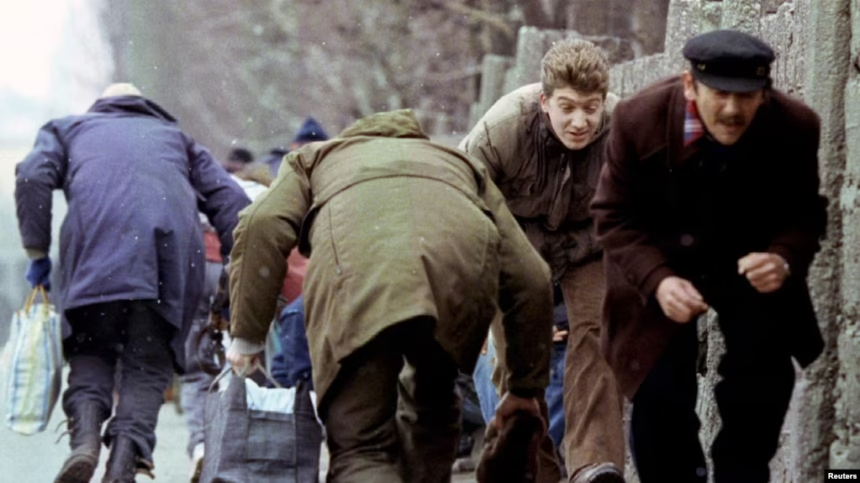
During the nearly four-year siege of Sarajevo in the 1990s, sniper attacks were a constant threat to civilians moving through the city. According to victims’ associations and international court rulings, every tenth child killed during the siege died from sniper fire, while more than 14,000 children were wounded.
Despite the scale of the attacks, no individual sniper has been prosecuted in domestic or international courts so far. However, the International Criminal Tribunal for the former Yugoslavia concluded in its judgments against senior officials of Republika Srpska that the sniper campaign was aimed at terrorizing the civilian population of Sarajevo.
The decision by the city to take part in the Milan proceedings is therefore seen as an attempt to push forward accountability efforts and bring renewed attention to unresolved wartime crimes.