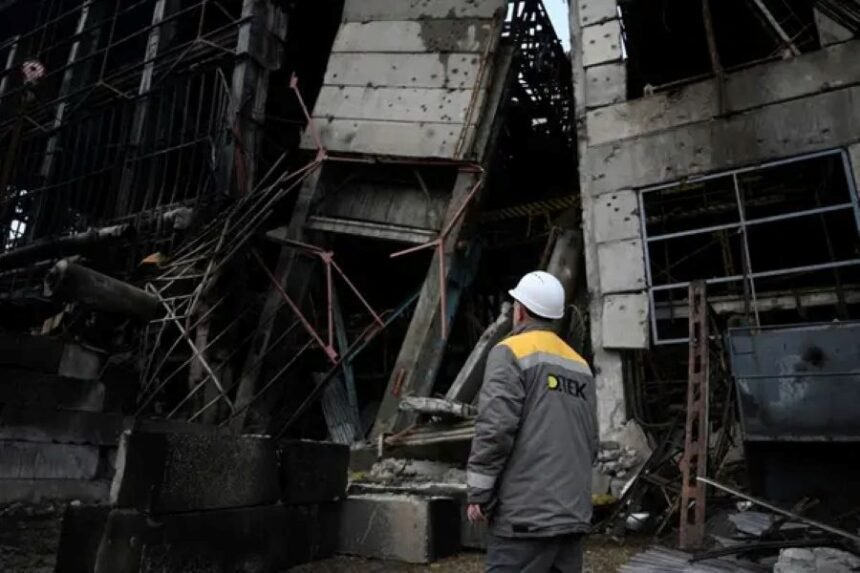
Ukraine’s Security Service (SBU) has formally stated that Russia’s systematic attacks on Ukraine’s energy infrastructure constitute crimes against humanity, citing extensive evidence collected since the start of the current heating season.
According to the SBU, Russian forces have carried out a deliberate Kremlin policy aimed at creating life-threatening conditions for civilians by targeting critical energy and heating facilities across the country.
Scale of the Attacks
Since October 2025, Ukrainian investigators have documented 256 Russian air strikes on energy and heating infrastructure nationwide, including:
- 11 hydroelectric power plants
- 45 combined heat and power plants
- 49 precision strikes on thermal power plants
- 151 attacks on electrical substations
The heaviest damage has been recorded in Kyiv and the surrounding region, as well as in Kharkiv, Odesa, Dnipropetrovsk, Sumy, Mykolaiv and Chernihiv regions, the SBU said.
Weapons Used and Civilian Impact
Russia has employed a coordinated mix of ballistic and cruise missiles, including Iskander, Kalibr, Kh-101 and Kh-69, alongside Iranian-made Shahed-type drones, referred to by Russia as Geran.
Each attack involved combined drone and missile strikes, often timed during periods of severe cold, leading to widespread power outages, heating failures and disruptions to water supply affecting millions of civilians.
Legal Classification and Investigation
The SBU announced it is classifying the systematic destruction of Ukraine’s energy system as crimes against humanity under Ukrainian law, emphasizing that such acts are recognized as international crimes.
“These crimes may be prosecuted both in Ukrainian courts and in foreign jurisdictions,” the agency said.
Investigators are working at every strike location to build a comprehensive evidence base, under the procedural oversight of Ukraine’s Prosecutor General’s Office.
Humanitarian Crisis and Government Response
Recent Russian strikes have pushed parts of Ukraine to the brink of a humanitarian crisis. Earlier this week, a massive drone attack on Kryvyi Rih left more than 700 apartment buildings without heating as temperatures fell to –7°C (19°F).
On Wednesday evening, President Volodymyr Zelensky announced that Ukraine would move toward declaring a state of emergency in the energy sector, citing the severe impact of Russian attacks combined with worsening winter conditions.
Zelensky outlined three key response measures, beginning with the creation of a special emergency headquarters in Kyiv to coordinate a round-the-clock national response to the unfolding energy crisis.