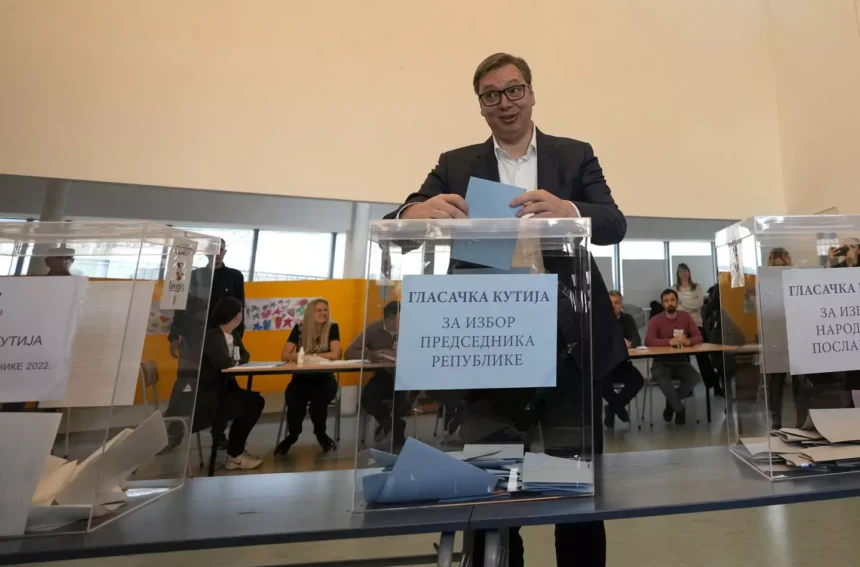
As President Aleksandar Vučić continues to postpone the announcement of snap elections, the student movement and opposition parties are using the extra time to strengthen logistics and grassroots campaigning. Observers note that the question is no longer whether elections will happen, but who stands to gain from the delays.
Serbia has entered a pre-election atmosphere in 2026, following over a year of protests, blockades, and political tension. While the president has reportedly accepted the challenge posed by students and citizens demanding early elections, the exact date remains uncertain. Potential timeframes mentioned have ranged from “before the legal deadline” to late 2026 or early 2027, with October, November, or December now being speculated.
Political analyst Dušan Spasojević warns that, if held, these elections could see the ruling party at risk:
“The biggest strength of students and the opposition lies in the change we have seen among voters. For the first time, the ruling and opposition blocks are relatively balanced, and the authorities could realistically lose,” Spasojević said.
“But no one should be complacent. There is still a lot of time before the elections, and the government retains significant resources and has repeatedly shown its ability to navigate challenges.”
Students Shift Focus to Electoral Preparation
Mass protests largely subsided at the end of 2025, and student activists returned to their studies. The movement has now pivoted from street protests to electoral preparation. This includes setting up election headquarters, training observers, and developing campaign programs.
Some students are campaigning door-to-door, while others organize initiatives like “Student in Every Village”, engaging citizens, countering pro-government narratives, and gathering feedback.
Danilo Erdeljan and Sonja Hajduković from Novi Sad report that the goal is not only mobilization but also building trust:
“The authorities are waiting to see if people will tire and give up, but in the meantime, this gives us more time to prepare,” said Erdeljan.
The student movement’s organizational skills are steadily improving, and every local election brings new experience, providing confidence in facing potential irregularities on election day.
Support and Challenges
Student support remains strong. On December 28, activists collected nearly 400,000 signatures in over 100 towns and municipalities, demonstrating that mass mobilization could surge once elections are officially called.
Spasojević notes that while the student movement’s image and integrity compensate for some organizational limitations, the critical test will come when support shifts from the movement to individual candidates, as public perception of candidates will play a decisive role.
Opposition Coordination and European Orientation
The opposition continues to stress the importance of unity, particularly around pro-European policies. Five opposition parties have formed a front emphasizing European integration, which analysts view as strategically sound given Serbia’s geopolitical shifts and the government’s turn toward nationalist rhetoric.
However, delays in elections allow Vučić to consolidate power further. In recent months, hundreds of dismissals occurred in the public sector, targeting both protest participants and those associated with them. Students continue to face legal actions, with some in exile, while universities experience financial and administrative pressures.
Despite the challenges, student activists remain determined. Erdeljan emphasizes:
“From the start, we knew this is not a sprint but a marathon. People have endured so far, and I believe they can continue as long as necessary.”