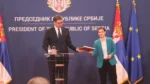
Serbia has not aligned with the latest European Union sanctions on Iran, raising concerns over potential political repercussions from the United States. Over the past month, President Aleksandar Vučić has repeatedly warned of global conflicts, emphasizing that Serbia would remain neutral in potential U.S. military actions against Iran.
Despite Serbia’s stated neutrality, it failed to follow EU sanctions aimed at addressing Iran’s support for Russia in the war against Ukraine and Iran’s involvement with armed groups in the Middle East and Red Sea region. Other EU candidate countries in the region have complied with these sanctions.
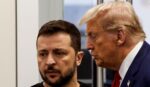
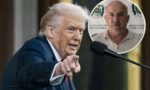
Foreign policy analyst Boško Jakšić notes that Serbia’s continued refusal to align with EU and UN resolutions—particularly those criticizing Russia or Iran—could trigger a retaliatory response from U.S. President Donald Trump, even though Iran remains one of the few Middle Eastern countries not recognizing Kosovo. Jakšić adds that Serbia’s alignment rate with EU foreign policy has dropped to 60%, largely due to these decisions.
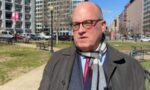
Dimitrije Milić, director of the New Third Way organization, explains that Serbia has historically balanced EU integration goals with maintaining relations with anti-Western states that do not recognize Kosovo, including Iran. He notes that while Serbia now operates with less EU pressure, Washington is closely monitoring the situation, particularly considering Serbia’s ties to Russia and China.
The EU sanctions in question, issued in January 2026, target Iranian military support to Russia and the potential development of nuclear weapons. Serbia’s lack of compliance reflects its ongoing balancing act between Western expectations and strategic relationships in the Middle East.