A growing wave of harsh and inflammatory political rhetoric is increasingly poisoning the public discourse in Serbia, raising concerns among analysts, officials, and civil society representatives about the erosion of democratic standards and basic communication norms.
The debate intensified after several controversial statements by government officials triggered strong public reactions and renewed calls for political accountability.
One of the most criticized remarks came from Minister of Public Investments Darko Glišić, who warned in a television appearance: “Do not enroll your children in blockade universities, because they will return to you like that girl from Šabac — in a coffin.” The statement sparked immediate outrage, with parts of the academic community demanding his resignation.
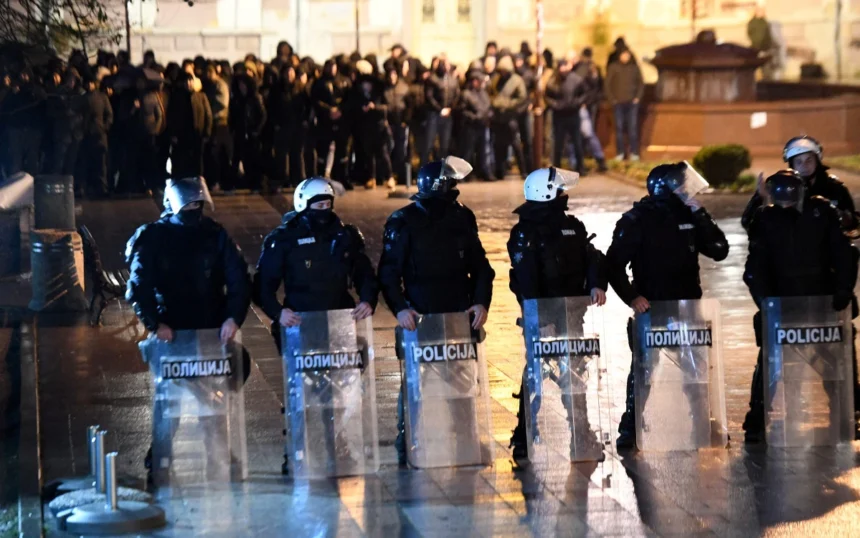
Shortly after, Minister of Information Boris Bratina caused further controversy by stating that students “are not aware that the police there have the right to beat them and kill them.” He later clarified that he supports peaceful protest and did not intend to endorse violence, claiming his remarks were taken out of context.
Prime Minister Đuro Macut responded by saying the statements were personal views and not official government positions, emphasizing they were misinterpreted. However, the remarks continued to draw criticism from opposition figures and independent institutions.
Institutional reactions and public backlash
Former Commissioner for Equality Protection Brankica Janković strongly condemned the statements, describing them as “beyond all limits of humanity and dignity,” and warning that such rhetoric reflects a broader lack of accountability in public communication.
She stressed that public officials must be held to a higher standard, stating that apologies alone are insufficient without consequences. According to Janković, repeated normalization of such rhetoric risks deepening societal divisions and undermining trust in institutions.
“Language shapes reality”
Simona Žikić from the Institute for Philosophy and Social Theory highlighted the broader implications of political speech, arguing that language does not merely reflect reality but actively shapes it.
“When public figures use violent or dehumanizing rhetoric, they define what becomes socially acceptable,” she noted, warning that repeated exposure to such discourse can shift societal norms over time.
She emphasized that freedom of speech includes responsibility, particularly for those in positions of power whose words carry institutional weight and influence public perception.
A broader crisis of political communication
The article notes that despite repeated public calls for dialogue in Serbia over the past year and a half, meaningful political communication between opposing sides has largely broken down. Following recent protests and tensions, mutual accusations have intensified, further deepening mistrust.
Observers warn that the continued escalation of inflammatory language risks creating a political environment in which dialogue becomes increasingly difficult, and social polarization deepens further.
Many analysts now argue that a “reset” of political discourse is necessary — but also caution that such a shift appears distant given current trends.