Serbian lawyer Čedomir Stojković announced that on Monday he will submit a formal request to the War Crimes Prosecutor’s Office and the Office for Organized Crime in Belgrade, demanding an investigation into Serbian President Aleksandar Vučić’s alleged involvement in the so‑called “Sniper Safari” during the Bosnian War — a chilling operation in which Bosniak civilians in Sarajevo were reportedly hunted and killed for money, as though they were game animals.
According to Stojković, there is no justification for the Milan Prosecutor’s Office to be conducting investigations alone, and he insists that Serbia’s own institutions are obliged to investigate their sitting president.
“On Monday, I will submit a request for investigation. The Belgrade Prosecutor for War Crimes is only 300 km from Sarajevo — and just three kilometers from Aleksandar Vučić himself,” Stojković wrote on X.
Claims Point Toward Direct Links With Belgrade
Stojković argues that existing testimonies and evidence indicate that the coordination of the killings and the transport of foreign “sniper tourists” into Sarajevo were organized from Belgrade, pointing to Vučić’s own presence in the area at the time.
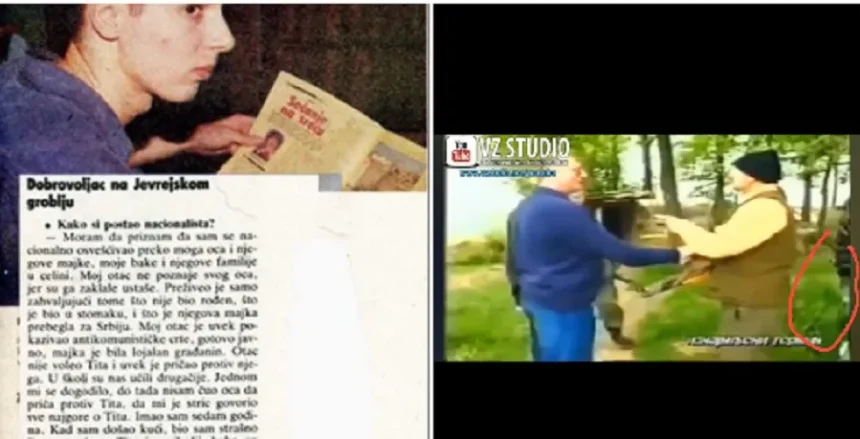
He cites Vučić’s 1994 interview with the magazine Duga, in which the future president admitted volunteering on the Serb side of Sarajevo, specifically around the Jewish Cemetery — the very location repeatedly cited as a sniper firing position against civilians.
“The Jewish Cemetery is mentioned as a place from where tourists brought by Karadžić’s forces — via Belgrade — shot at civilians as part of the ‘Sniper Safari’. Vučić admits he was positioned exactly there,” Stojković emphasized.
Testimony From Šešelj and Video Evidence
The claims are further supported by Vojislav Šešelj, the convicted war criminal and former political mentor of Vučić, who stated during his Hague trial that:
“Vučić volunteered with Slavko Aleksić at the Jewish Cemetery.”
Aleksić, a notorious Serbian commander during the siege, oversaw units accused of enabling or participating in “sniper safaris.” Under his command were not only Serbian fighters but also Russian volunteer detachments, some of whom, according to reports, offered paid “tours” for foreigners to kill civilians.
Stojković also presented a 1993 video showing Vučić holding a rifle strongly resembling a sniper weapon, reinforcing suspicions about the nature of his activities during the war.
A Network of Participants
The lawyer additionally named Zlatko Novaković, also known as “Zak Novak,” another alleged participant in the sniper operations. Novaković recently reappeared in a video threatening protesters at Vučić’s tent‑encampment in Belgrade — a camp staffed, according to Stojković, exclusively with loyalists and mercenaries of the current Serbian regime.
“This is the same man who took part in mass killings of civilians,” Stojković said, warning that the legacy of wartime brutality is now openly resurfacing under Vučić’s political protection.
Serious Unanswered Questions for Vučić
Stojković has publicly challenged President Vučić to answer direct questions about his actions:
- While the army you volunteered for organized a “Sniper Safari,” did you ever state you would shoot only soldiers?
- Or did you, like others, target civilians — the same civilians your army openly hunted as a paid activity?
He reminds the public of Vučić’s infamous 1990s statement:
“For every Serb killed, we will kill 100 Bosniaks.”
This, Stojković argues, reflects the ideological climate in which Vučić volunteered to fight — a climate that coincides with documented massacres, including the Markale market bombings and numerous sniper attacks on Sarajevo civilians.
A Growing Scandal for a President Already Questioned for Authoritarian Governance
For years, Vučić has faced criticism from international observers for eroding democratic norms, controlling the media, and weaponizing state institutions for political survival. Now, the possibility of direct wartime involvement in crimes against civilians introduces a far more severe and explosive dimension to his already controversial legacy.
If Belgrade prosecutors act on Stojković’s request, this could transform into the most serious legal and political crisis of Vučić’s career, raising the question of how long Serbia’s institutions can continue shielding him.