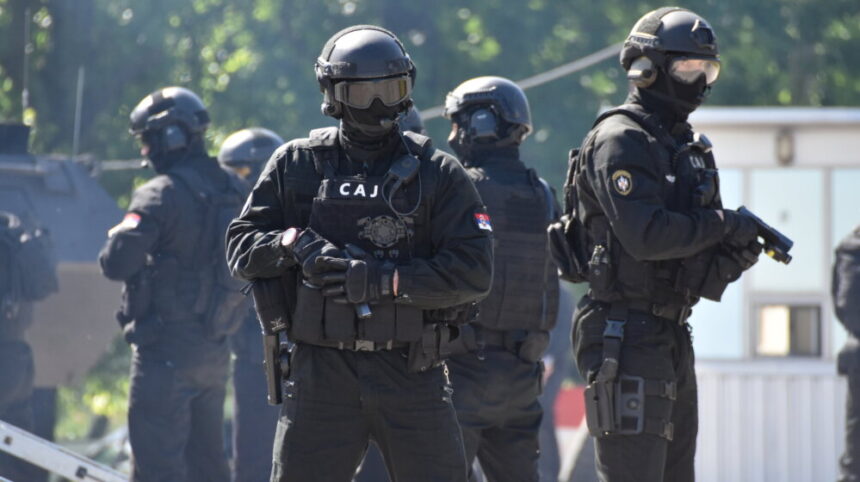
The Serbian Special Anti-Terrorist Unit (SAJ) is undergoing a significant overhaul following the dismissal of long-time commander Spasoje Vulević, sparking fears that the elite unit may become an instrument of political control rather than a law enforcement body.
According to N1, the entire leadership structure of SAJ is being replaced under new commander Igor Žmirić, including all team leaders and four deputies, while some personnel have been reassigned to the Unit for Protection of Specific Persons and Objects (JZO).
Concerns Raised by Experts
Milan Dumanović, retired police officer, stated that the new appointments reflect a broader trend across the Ministry of Interior (MUP) to install personnel loyal to the current regime. He expressed particular concern about the appointment of Tanja Drobnjak as Žmirić’s advisor, citing her alleged misconduct during protests last summer.
“SAJ is meant for hostage situations and serious urban crimes, not for controlling protests. If used for such purposes, these changes clearly signal politicization of the unit,” Dumanović said.
Predrag Simonović, retired SBPOK inspector, warned that the current shake-up in key police units and directorates could result in SAJ being deployed at protests and other civil demonstrations, noting a pattern where loyalty is valued over formal qualifications or experience.
“Encouraged by prior and potential future pardons, and in a climate where the judiciary is weakened, we may soon see SAJ units used against those perceived as threats to the ruling elite,” Simonović added.
Božo Prelević, attorney, described the transformation as an effort to create a loyalist force, warning that such politicization undermines ethics, professional standards, and public trust in law enforcement institutions.
“Turning SAJ into loyalists produces lawlessness and immorality, which feeds criminal networks and jeopardizes citizens,” Prelević explained.
Implications
Analysts argue that these developments could deepen public distrust in law enforcement and raise concerns about civil liberties, especially if elite units are increasingly used to suppress protests or dissent rather than fulfill their designated security roles.