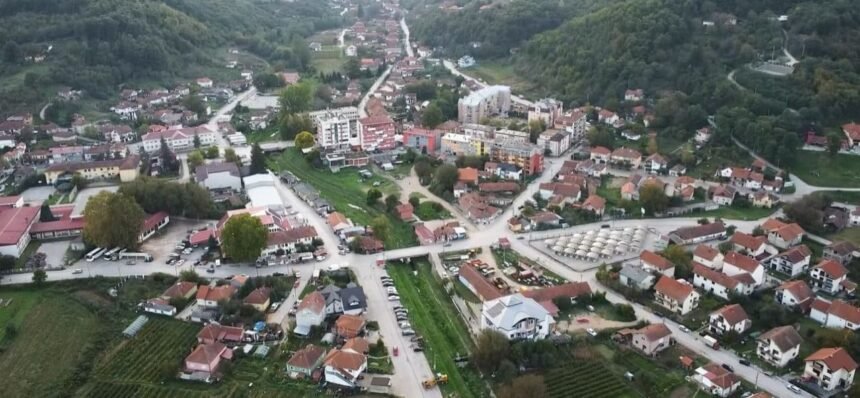
Campaigners and ethnic Albanians in Serbia and the U.S. have welcomed a new bill introduced in the U.S. Congress on Wednesday that would require the State Department to assess discrimination against ethnic Albanians in Serbia’s Presevo Valley, where thousands are reported to have been stripped of basic civil rights.
The Presheva Valley Discrimination Assessment Act, championed by Congressman Keith Self, mandates a formal review of discrimination, including political disenfranchisement, language restrictions, barriers to education, economic neglect, and institutional intimidation, according to lobbying group Albanians for America.
The bill responds to reports that thousands of ethnic Albanians in the municipalities of Medvedja, Bujanovac, and Presevo have had their addresses marked “inactive” by Serbian authorities. This so-called “address passivisation” prevents residents from renewing identification documents or exercising fundamental rights such as voting.
Congressman Self emphasized that the practice effectively strips ethnic Albanians of their civil rights. Other reported issues include the non-recognition of diplomas from Kosovo, restrictions on Albanian-language school materials, and the intimidation of ethnic Albanians by law enforcement without due process.
Local leaders welcomed the bill. Ardita Sinani, Mayor of Presevo, wrote on Facebook: “Today, the US is demanding legal and political accountability for the systematic discrimination against Albanians in the Presevo Valley … Our voice was heard. Our work is being seen.”
Ethnic Albanian MP Saip Kamberi traced the issue back to November 2011, when Serbia adopted the Law on Residence of Citizens, allowing authorities to classify addresses as inactive if a resident is deemed not to live there. Numbers illustrate the impact: in Medvedja, registered voters dropped from 10,465 in 2015 to just 6,360 in 2022, highlighting the scale of passivisation.
Human rights organizations have criticized the practice. Izabela Kisic, director of the Helsinki Committee for Human Rights in Serbia, told BIRN in 2022 that passivisation targets exclusively Albanian citizens, with no evidence of ethnic Serbs being affected. Reports submitted to the Serbian government in 2021 were reportedly ignored.
The European Union has adopted resolutions condemning the practice, yet the situation persists. Serbia continues to deny allegations of human rights violations and discrimination.
In November 2024, ethnic Albanians staged multiple protests in Medvedja against the routine marking of their addresses as inactive.