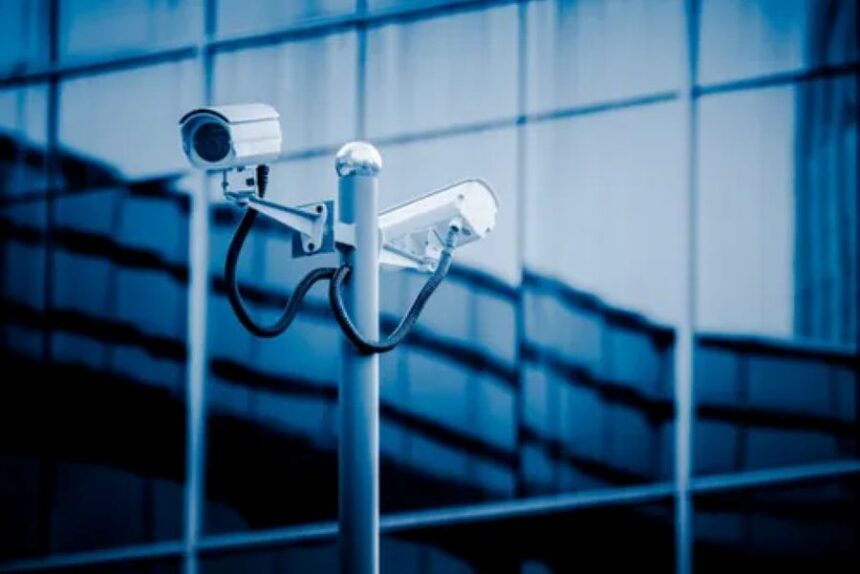
In recent years, Serbia has witnessed a rapid expansion of digital surveillance infrastructure, raising urgent questions about privacy, accountability, and citizens’ rights. From public transport to schools, hospitals, and city streets, authorities are increasingly relying on cameras, microphones, facial recognition, license plate tracking, and drones to monitor individuals in real time.
A recent investigation by BIRN has mapped public procurement data, revealing the scale and scope of surveillance in Serbia, highlighting both technological advancement and gaps in legal oversight.
A New Era of Surveillance
Across Serbia, hundreds of public institutions have acquired surveillance technology capable of more than simple video recording. Many cameras now include audio capture, turning buses, schools, hospitals, and public spaces into spaces of constant monitoring. Voice recognition systems, used by the Ministry of Internal Affairs, can identify speakers, track accents and dialects, and create detailed profiles.
Automated license plate recognition (ANPR) systems have become widespread, capable of tracking vehicles across cities, mapping travel routes, and even recording the movements of individuals within cars. Some systems now integrate facial recognition, further increasing the intrusiveness of monitoring.
Meanwhile, drones equipped with high-resolution, thermal, and night-vision cameras add a mobile layer to Serbia’s surveillance infrastructure, enabling authorities to track public gatherings, inspect critical infrastructure, or monitor urban areas without warning. Experts warn that drones’ unpredictability can generate a psychological “chilling effect,” deterring lawful public activity out of fear of constant observation.
Surveillance Beyond Security
While authorities argue that surveillance technologies are deployed for public safety, traffic control, or institutional security, experts caution that the social and ethical ramifications are broader. Behavioral analysis software, used to count people, track movement, and detect “unusual” behavior, can classify lawful activities—protests, strikes, or gatherings—as suspicious.
Professor David Lyon, a sociologist from Queen’s University in Canada, notes that such systems enable mass categorization of citizens, which can lead to unequal treatment based on automated profiling. Similarly, Aljoša Ajanović from the European Digital Rights Initiative (EDRI) emphasizes that the combination of fixed cameras, drones, and AI-driven analytics extends state surveillance into nearly every aspect of public life.
Vulnerable Populations at Risk
BIRN’s investigation highlights particularly sensitive cases: schools, pre-schools, social care centers, and healthcare institutions have adopted facial recognition and audio-video monitoring. This raises critical privacy concerns, as children, patients, and vulnerable populations are monitored in spaces traditionally considered private and protected.
Tamara Zavišić, a researcher on AI ethics, warns that while some uses—like locating missing children—may be legitimate, these systems can also be abused for profiling, behavioral prediction, and unwarranted monitoring.
Legal Gaps and Limited Oversight
Serbia currently lacks a comprehensive legal framework for biometric and audio-video surveillance. While the Constitution guarantees the right to privacy, regulatory mechanisms are often reactive rather than preventive, leaving citizens vulnerable to unmonitored data collection.
Former privacy commissioner Brankica Janković and legal experts emphasize that transparent oversight, strict limitations, and purpose-driven deployment are essential to prevent misuse. Without these safeguards, the surveillance state risks normalizing constant observation, undermining democratic freedoms and public trust.
The Broader Implications
Serbia is not alone in facing these challenges. Across the globe, governments are rapidly adopting AI-powered surveillance tools, often outpacing the development of laws and regulations. The Serbian case illustrates a key tension in modern governance: balancing security and efficiency with human rights, privacy, and civil liberties.
The proliferation of audio-enabled cameras, ANPR systems, facial recognition, behavioral analytics, and drones shows that technological capabilities are advancing faster than public debate and legal oversight. As BIRN’s Atlas of Surveillance demonstrates, citizens are increasingly observed in daily life, often without their knowledge or consent.
Experts agree that public awareness, independent oversight, and legal safeguards are crucial. Without them, surveillance risks not only invading personal privacy but also shaping how citizens behave, communicate, and participate in public life.
Conclusion
Serbia’s growing network of surveillance technologies represents both an opportunity and a danger. While authorities can enhance safety, manage traffic, and protect public property, the unchecked use of advanced monitoring tools poses significant risks to privacy, freedom of movement, and democratic engagement.
As the country continues to expand its surveillance infrastructure, the challenge will be ensuring that technology serves society rather than controls it, and that citizens’ rights are respected in an era of unprecedented monitoring.