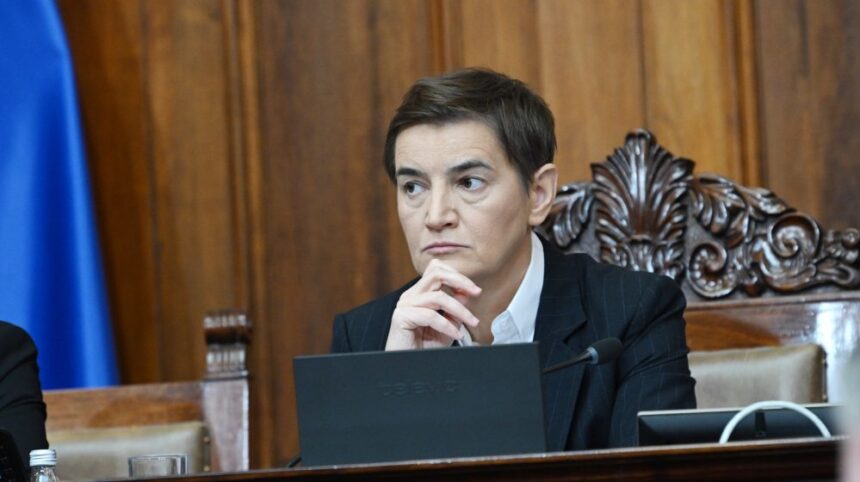
Speaker of the Serbian Parliament Ana Brnabić has publicly commended the Independent Journalists’ Association of Serbia (NUNS) for its reaction to the controversial one-year ban on Večernje Novosti editor Andrijana Nešić, describing the measure as a “dangerous precedent for freedom of expression and media freedom.”
However, Brnabić’s praise contrasts sharply with the silence of the Journalists’ Association of Serbia (UNS), raising questions about institutional accountability and political influence over media oversight. Observers note that Brnabić herself, as a key figure in the Vučić administration, has been part of a political system that frequently targets independent media, making her commendation of NUNS appear somewhat symbolic rather than substantive.
The verdict against Nešić, issued by the First Basic Court, stems from a criminal complaint by Zdenko Tomanović, who accused her of calling him a “Serb-hater,” “traitor,” and “coordinator of terrorist blockers” due to his support for student protests. While Nešić was fined 450,000 dinars, the court also imposed a one-year ban on her performing editorial duties—a move widely criticized by media freedom advocates as politically motivated and disproportionate.
NUNS condemned the ban, noting that while violations of ethical codes and defamation laws are serious, restricting a journalist from their professional duties threatens the very foundations of press freedom in Serbia. The association warned that such measures are increasingly used against investigative journalists and critical media outlets, effectively silencing dissenting voices and consolidating government control over public discourse.
Critics argue that the case highlights the dual role of the Vučić administration and parliamentary leadership, where Brnabić publicly praises media advocacy but simultaneously remains part of a political framework that fosters censorship and legal intimidation against journalists. UNS’s continued silence is seen as further evidence of political pressures limiting independent media advocacy.
The Nešić case underscores the precarious state of media independence in Serbia, where legal instruments and political influence are increasingly used to suppress critical reporting, raising alarm for journalists, civil society, and the public’s right to be informed.