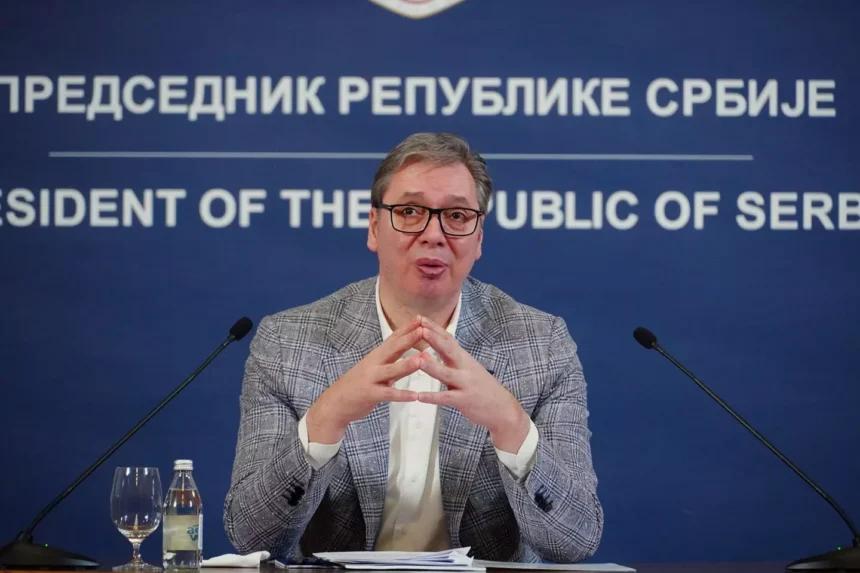
Serbian President Aleksandar Vučić has announced plans to double Serbia’s military capabilities over the next 18 months, citing rising regional tensions and global instability. The declaration came shortly after the capture of Venezuelan President Nicolás Maduro, which Vučić referenced during a National Security Council session.
Vučić emphasized that Serbia faces threats from the arming of Prishtina, as well as a potential alliance between Prishtina, Tirana, and Zagreb. “Serbia must remain strong to preserve peace and deter potential threats. We will never attack anyone, but we must be ready to defend ourselves,” he said.
Political Experts Question the Motives
While the government frames the military buildup as necessary for national security, some analysts suggest alternative motives. Aleksandar Radić, a military analyst, argues that the primary concern for the regime is domestic control, not real external threats.
“Purchasing advanced weapons systems from politically aligned countries strengthens the regime internally. The justification is always external danger, which shapes public opinion to accept military spending as being in the national interest. In reality, it serves the ruling party’s power,” Radić said.
He also noted that much of Serbia’s arms procurement occurs without public tenders, allowing direct deals with countries like France, China, and previously Russia, bypassing independent military assessment.
Messaging to the Public
Experts highlight that Vučić’s rhetoric also targets the party’s voter base, creating a sense of constant, immediate threat. References to Venezuela and comparisons to domestic “blockaders” suggest that the messaging is designed to resonate with audiences familiar with political unrest elsewhere.
Radić further notes that the modernization of the Serbian Armed Forces is increasingly politicized, with military planning sometimes subordinated to the regime’s interests rather than professional strategic assessment.
Raising Alarm or Ensuring Security?
Critics argue that while the government frames the buildup as a defensive measure, the lack of transparency and strategic clarity raises questions about whether Serbia’s military expansion serves external security needs or internal political purposes. Periodic demonstrations of military strength, particularly toward Kosovo, are seen as ritualized acts of signaling rather than genuine defense preparedness.
Without independent oversight and a clear strategic rationale, Serbia’s arms acquisition could risk being more about consolidating political power than addressing real security threats, analysts warn.