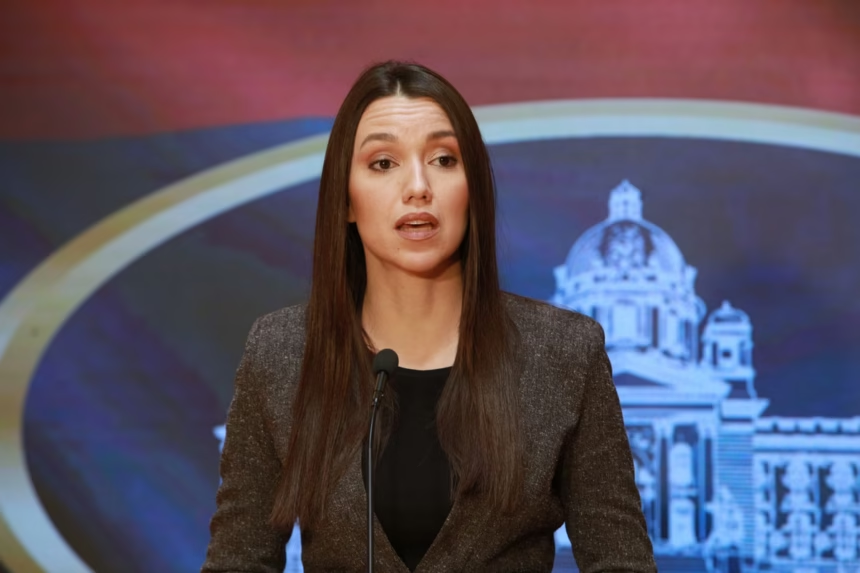
Serbia’s Deputy Speaker of Parliament, Nevena Đurić, a close associate of Defense Minister Bratislav Gašić, has publicly reacted to the seizure of five tons of marijuana in the village of Konjuh, a case that has once again raised serious questions about criminal networks operating under the protection of the ruling Serbian Progressive Party (SNS).
The case gained national attention after opposition leader Miroslav Aleksić published photographs allegedly showing Rade Spasojević, an SNS municipal councilor from Kruševac, claiming he is one of the suspects linked to the massive drug operation and personally connected to the Gašić family, one of the most powerful political clans within President Aleksandar Vučić’s inner circle.
Aleksić described Spasojević as a trusted party figure, a regular host at SNS celebrations and a “team member of Vučić”, fueling public outrage and intensifying demands for accountability at the highest political level.
In response, Nevena Đurić took to social media platform X, dismissing opposition accusations and framing the affair as a political “circus” orchestrated by critics of the government. Her remarks targeted opposition MP Ivan Mandić, who suggested that figures far more powerful than Spasojević may be behind the operation, echoing widespread suspicions that the arrested individual is merely a low-level pawn in a larger, politically protected criminal structure.
Đurić, who became widely known in 2021 for her aggressive and dismissive conduct toward opposition figures on state television, has long been praised by President Vučić for her “combativeness,” a trait that critics argue reflects the authoritarian political culture fostered by the SNS leadership.
Opposition parties and independent analysts stress that the speed with which senior SNS officials distanced themselves from Spasojević only deepens concerns of systemic corruption, selective justice, and political control over law enforcement. They argue that drug trafficking on this scale cannot occur without institutional cover, pointing directly to the Vučić-led power structure that dominates Serbia’s security services and judiciary.
Despite official statements insisting that “no one is above the law,” critics maintain that the government’s response once again illustrates a familiar pattern: publicly sacrificing expendable party members while shielding those at the top of the political hierarchy.
The Konjuh case is now being described as the largest drug seizure in Serbia’s history, but for many observers, it has become an even stronger symbol of the deep entanglement between organized crime and the Vučić regime.