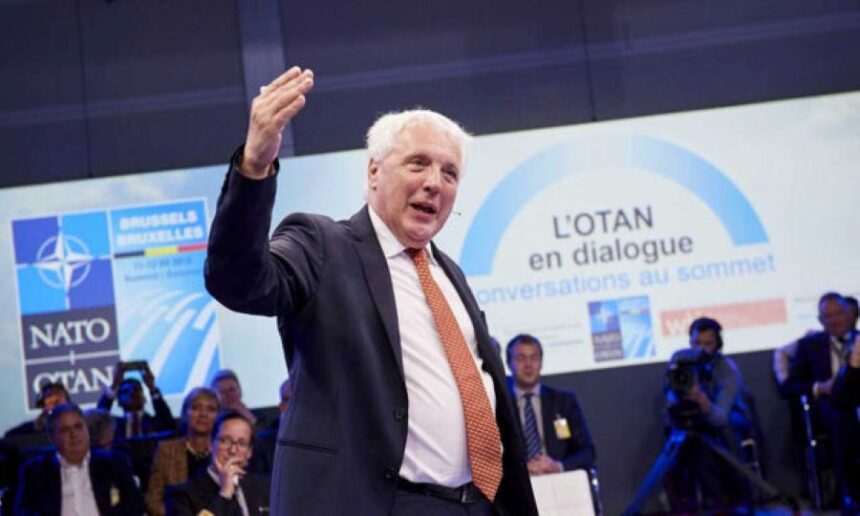
Former NATO official Jamie Shea spoke about the evolving tactics used by various states, including Serbia, to destabilize and pressure neighboring countries.
Shea emphasized that, unlike 27 years ago, there is no longer open aggression with ground forces; instead, hybrid methods are now prevalent.
“Fortunately, the situation is far more stable than in the past. KFOR forces have maintained a continuous presence in Kosovo to preserve peace, and the EU, taking over from NATO in 2004, performed a similar role in Bosnia. NATO and EU actions helped prevent civil war in North Macedonia between 2002 and 2004. While regional tensions persist due to unresolved disputes, harsh rhetoric has not been accompanied by overt military aggression as it was in the 1990s. Threats today come mainly from hybrid activities or so-called ‘grey zone’ tactics, such as propaganda, disinformation campaigns, economic pressure through boycotts or restrictions, and the use of covert security structures to create chaos and political division. Serbia has indeed used such tactics against Kosovo to try to weaken it. The Banjska incident in September 2023 is a clear example. Therefore, NATO’s key task today is to assist Kosovo with enhanced intelligence on these forms of hybrid warfare and strengthen its internal resilience to counter them,” Shea told RTK.