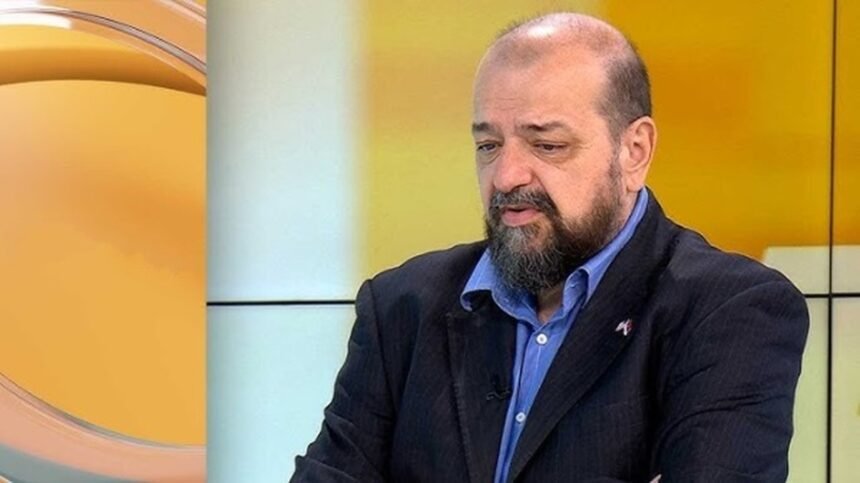
Former ally of Serbian President Aleksandar Vučić, Dragan Šormaz, has stated that the latest elections in Serbia revealed a new and difficult reality for the country’s leadership.
According to Šormaz, the results clearly show that Vučić’s power “is no longer as strong as it once was,” describing the ruling coalition’s victories in traditional strongholds of the Serbian Progressive Party as “relatively weak and unconvincing.”
“This is a serious erosion of public trust in the government,” Šormaz emphasized, delivering one of his sharpest criticisms yet of Vučić following the recent local elections.
He noted that, compared to the 2022 elections, the list led by Vučić performed significantly worse — despite efforts to unify coalition partners under a single political umbrella and the extensive use of available mechanisms to mobilize and control voters.
Šormaz also criticized recent attempts to shift public attention through new scandals, suggesting they reflect “political nervousness” rather than a coherent strategy, particularly in relation to accusations directed at the opposition.
He highlighted that narrow margins in traditionally safe areas for the ruling party are especially concerning. “If the difference is small where the government is strongest, what can be expected in major urban centers where the opposition has greater potential?” he questioned.
However, Šormaz stressed that weakening power does not automatically lead to change. He also strongly criticized the opposition, describing it as “fragmented, programmatically unclear, and organizationally insufficient.”
According to him, the opposition lacks clear positions on key issues such as European integration, NATO, Kosovo, and the war in Ukraine.
“What is missing is the political articulation of this space,” Šormaz concluded, warning that without a clear alternative, public dissatisfaction cannot transform into real change.