EU leaders remain divided on whether to engage directly with Vladimir Putin as part of ongoing efforts to end the war in Ukraine. Some member states support appointing a special EU envoy, while others insist Russia must make concessions first.
The debate gained urgency after French President Emmanuel Macron and Italian Prime Minister Giorgia Meloni publicly backed the idea last month, emphasizing that as Ukraine’s largest donor, the EU needs a seat at the negotiating table independent of the White House, currently the main interlocutor with Moscow.
“If Europe decides to take part in this phase of negotiations by talking only to one of the two sides, I fear the positive contribution it can make will be limited,” Meloni said.
Divided Opinions
Countries such as Austria, Czechia, and Luxembourg support re-engagement, arguing that Europe should speak with one voice to strengthen its influence.
“Europe is strongest when it speaks with one voice. We need a single European line, not 27 national tracks,” said Austria’s Foreign Minister Beate Meinl-Reisinger.
However, Germany, Estonia, Lithuania, and Cyprus oppose direct talks, citing Putin’s maximalist demands and Russia’s ongoing attacks on Ukrainian civilian and energy infrastructure.
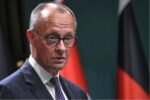
“Moscow must be willing to end the war. If Moscow isn’t, the price it has to pay, including the economic price, will increase week by week,” German Chancellor Friedrich Merz said.
Swedish Prime Minister Ulf Kristersson noted that Europe might reopen channels eventually, but only if Russia engages in a serious peace process.
What Form Should Engagement Take?
Supporters of re-engagement differ on the approach. Macron attempted a discreet trip to Moscow via his adviser Emmanuel Bonne to prepare a phone call with Putin, which reportedly failed. He advocates a well-organized European approach with a clear mandate.
Latvian Prime Minister Evika Siliņa suggested a special EU envoy join the trilateral US-Russia-Ukraine talks, not negotiate with Russia alone, while maintaining sanctions.
High Representative Kaja Kallas emphasized that any engagement should focus on political objectives, warning that Russia seeks the “absolute maximum” in negotiations:
“The point right now is not the person who does it, but more like how and what we want to get out of this. If the Russians think they are getting their maximum goals from the Americans, why should they want to talk to the Europeans?”
Next Steps
EU officials acknowledge the debate is serious but still abstract, with no clear plan or timeline. The issue may be discussed at the next EU summit on 19 March. Names floated for a prospective special envoy include Alexander Stubb, Margrethe Vestager, and Sauli Niinistö.
The urgency of the discussion is highlighted by trilateral US-Ukraine-Russia talks in Abu Dhabi, which excluded Europe, and the EU’s €90 billion loan to Kyiv, reinforcing the need for coordinated diplomacy.
“Political dialogue with Russia must be conducted on the basis of a unified EU position, agreed by all 27 member states,” said Slovenia’s foreign ministry.