More than three decades after the siege of Sarajevo, painful questions remain about who pulled the trigger against civilians—especially children—and whether some of those shooters came from abroad for what witnesses later called a “sniper safari.”
As a ten-year-old in October 1992, Elvedin Suliq was shot by a sniper while playing outside his home in the Sedrenik neighborhood. The sniper did not stop after the first shot and attempted to kill him deliberately. Elvedin survived, but to this day he does not know who shot him. Like hundreds of other child victims, no individual sniper was ever prosecuted for these crimes, despite international court rulings that confirmed a campaign of terror against Sarajevo’s civilians.
During the nearly four-year siege, more than 11,000 people were killed in Sarajevo, including over 1,600 children; every tenth child was killed by sniper fire, and more than 14,000 children were wounded.
“Sniper tourism” under investigation
The issue resurfaced after prosecutors in Milan opened an investigation into alleged “weekend snipers” or “sniper tourists”—foreign nationals who allegedly paid to access Army of Republika Srpska positions around Sarajevo and shoot civilians for “entertainment.”
Italian journalist Ezio Gavazzeni, who is preparing a book on the topic, claims these individuals met in Trieste, traveled via Belgrade, and were taken to sniper positions overlooking Sarajevo. According to retired Bosnian Army intelligence officer Edib Subašić, Bosnian authorities had already alerted Italian intelligence about such activities in 1993–1994, but no prosecutions followed.
Italian authorities have so far declined to comment on why investigations were not launched at the time.
“Safari” mentioned at The Hague
The term “safari” appeared publicly in 2003 during the trial of Slobodan Milošević at the ICTY. A protected witness testified that Nicholas Ribic, a Canadian citizen of Bosnian origin, had come to Sarajevo “to hunt people.” Ribic later joined a Serb special unit and was eventually convicted in Canada for crimes unrelated to sniper killings.
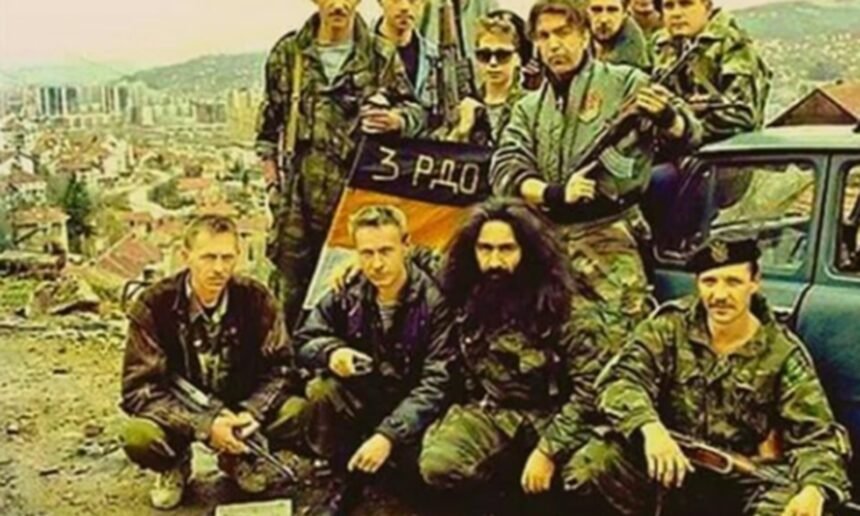
Former fighters from Serb units deny the existence of paid “sniper tourists” but confirm the presence of foreign volunteers motivated by ideology, including individuals from Russia, Ukraine, France, Greece, and North America.
Journalists’ testimonies
Foreign journalists who visited Serb positions around Sarajevo during the war described encounters with armed foreigners unfamiliar with the terrain, whom they believed to be “sniper tourists.” Reuters photographer Peter Kullmann recalled so-called “weekend Chetniks”—men working in Germany who traveled on weekends to fight around Sarajevo and returned to their jobs by Monday.
Some openly asked journalists whether they wanted them to shoot so it could be filmed. One justification Kullmann heard after their vehicle was shot at was chilling: “We fired because it was amusing.”
Political controversy
In 2025, Croatian journalist Domagoj Margetić submitted claims to Milan prosecutors alleging that Serbian President Aleksandar Vučić had been present at sniper positions during the siege. Vučić denied all allegations, stating he never fired a weapon and had no knowledge of any “sniper safari,” and announced legal action against media outlets reporting the claims.
Justice still pending
The Milan prosecution is expected to announce preliminary findings in March 2026. If indictments are issued, it would mark the first time in Europe that individuals are tried specifically for sniper killings of Sarajevo civilians.
Domestically, Bosnia and Herzegovina has yet to prosecute individual snipers for crimes against Sarajevo’s civilians—especially children—despite life sentences handed down by international courts to senior commanders such as Stanislav Galić, Dragomir Milošević, Radovan Karadžić, and Ratko Mladić.
The siege of Sarajevo lasted 1,425 days. For survivors like Elvedin, the central question remains unanswered: what kind of person aims a rifle at a child—and why?