Following the arrest of Venezuelan President Nicolas Maduro by U.S. forces, U.S. President Donald Trump stated that his administration would “run Venezuela” until a political transition takes place.
This statement, combined with the U.S. military intervention, has raised international concerns that the Trump administration may shift its attention to other strategic regions around the world.
Renewed Concerns Over Greenland
Fears regarding Greenland have resurfaced after members of Trump’s MAGA movement openly discussed the possibility of the United States taking control of the territory.
Tensions escalated further after a controversial post by Katie Miller, a former Trump administration official and wife of senior Trump aide Stephen Miller.
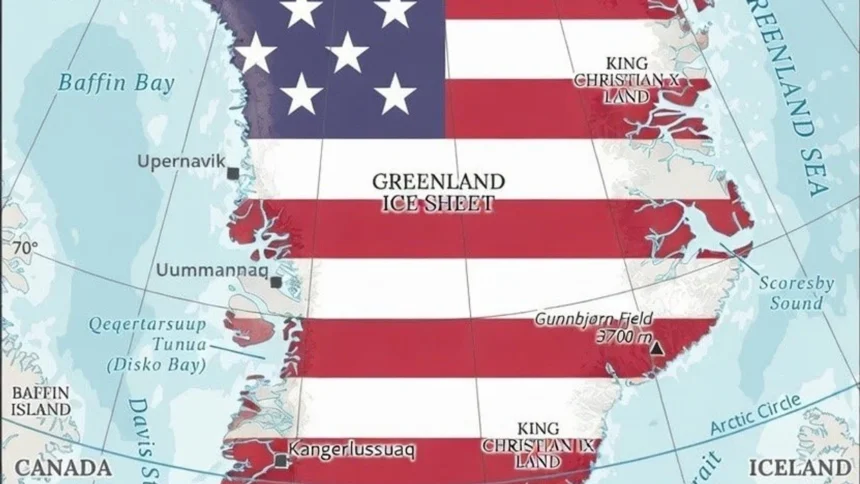
Late last night, Miller shared an image of a map of Greenland covered with the U.S. flag on the social media platform X, accompanied by a brief caption: “SOON.”
Danish Reaction: “A Provocation”
The post appeared just hours after the U.S. operation in Venezuela and the arrest of Maduro, and was widely perceived in Denmark as a provocation and a potential threat of annexation.
The statement drew an immediate response from Denmark’s Ambassador to the United States, Jesper Møller Sørensen, who shared the post along with what he described as a “friendly reminder” of the longstanding defense ties between the two countries.
Denmark Emphasizes Sovereignty and NATO Commitments
“The United States and Denmark are close allies and must continue to cooperate as such. U.S. security is also the security of Greenland and Denmark. Greenland is already part of NATO,” Sørensen stated.
He emphasized that Denmark and the United States already cooperate closely in the Arctic, and highlighted that in 2025 Denmark increased its defense allocations to $13.7 billion, specifically aimed at strengthening security in the Arctic and the North Atlantic.
“And yes, we expect full respect for the territorial integrity of the Kingdom of Denmark,” the ambassador added.
The incident has intensified diplomatic debate at a time of heightened global sensitivity, as Washington’s recent actions raise questions about future U.S. strategic intentions beyond Venezuela.