Hungarian opposition leader Péter Magyar, who has held a polling lead over incumbent Prime Minister Viktor Orbán, has promised that if he wins the upcoming April 12 parliamentary elections, he will launch an investigation to determine whether a recent explosive incident near the Serbia-Hungary border was a genuine diversion attempt or a politically motivated effort by external actors to influence Hungary’s elections.
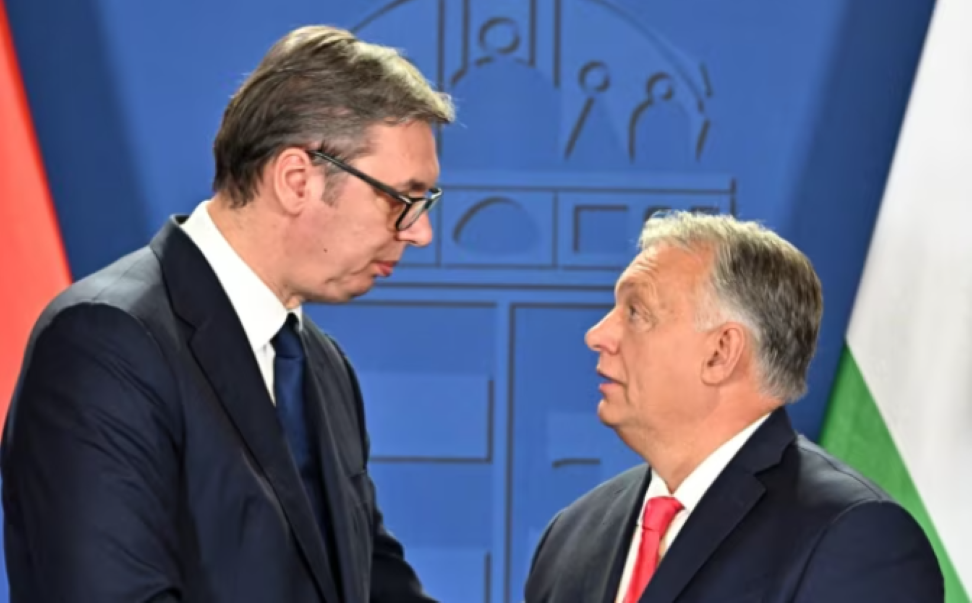
The announcement by Serbian President Aleksandar Vučić that powerful explosives were found near the ‘Balkan Stream’ gas pipeline, just seven days before Hungary’s elections, has been described by Dragan Šormaz, president of the Serbian Euro-Atlantic Council, as a “small act of support” for Orbán. According to Šormaz, however, Vučić’s assistance was “insufficient and ineffective.”
Political Calculations
Šormaz points out that Vučić did not go further to politically capitalize on the incident for Orbán, refraining from blaming Ukraine and even clearing them of suspicion. The explosive discovery, first reported by Vučić near the settlement of Velebit, involved two backpacks containing materials believed to be plastic explosives, according to the Subotica prosecutor’s office.
Critics question the logic of the scenario. As Austrian MEP Helmut Brandstätter called Vučić and Orbán’s story the “silliest tale,” Šormaz highlighted the close ties between the Serbian president and the Hungarian prime minister. He argued that if the explosives were intended for terrorism, it would make more sense for the suspect to target the border fence rather than the gas pipeline, which could have facilitated illegal entry into the EU.
Pre-Election Tensions
Independent Hungarian media and opposition parties have previously warned of potential “false flag operations” aimed at raising tensions ahead of the April 12 elections. Analysts have noted that incidents involving critical infrastructure could be exploited politically—even outside Hungary. The location of the incident, Kanjiža, a municipality with a majority Hungarian population, added to the sensitivity, occurring just a week before highly contested elections.
In Serbia, opposition leaders have criticized Vučić for using the military to amplify the story. Zdravko Ponoš, leader of the SRCE party and former Chief of General Staff of the Serbian Army, described it as an attempt to exploit the military’s credibility but called the effort unconvincing, emphasizing that while institutions seized the equipment, no suspect was apprehended.
Broader Geopolitical Implications
Šormaz also framed the incident within EU-Hungary relations, describing Orbán as “the EU’s most important Russian asset,” which aligns with Vučić’s interests in energy and political balancing. He stressed that Orban’s support in Western capitals is limited and that U.S. trust in Vučić has eroded due to unfulfilled commitments from the 2020 Washington Agreement and domestic corruption controversies.
A victory for Magyar’s opposition, Šormaz concluded, could weaken Russian influence in the region and shift narratives on EU and NATO integration. It would also challenge the perception in Serbia that Russian energy and military presence remain a strategic necessity.
The incident illustrates how security issues can be politicized during sensitive electoral periods, raising questions about institutional transparency, the motives behind official announcements, and the broader use of political theater in domestic and regional politics.