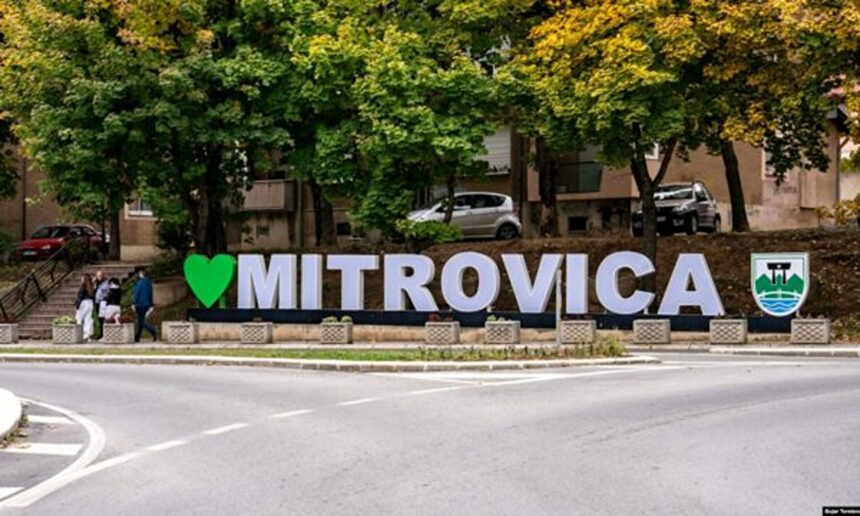
In the four municipalities in northern Kosovo – North Mitrovica, Leposaviq, Zvečan, and Zubin Potok – on December 5, constitutive sessions will be held during which the new mayors from the Serb List will once again take power.
These Serb-majority municipalities have been led by Albanian mayors since May 2023, after Serb List mayors resigned in November 2022 as part of a collective withdrawal of Serbs from institutions, in protest of the decisions of the Government of Kosovo.
The Serb List – the main political party of Kosovo Serbs, backed by Belgrade – acknowledged during the local election campaign that it had made a mistake by leaving the institutions, stating that the decision was taken to draw international attention to the “difficult situation” of Serbs.
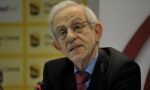
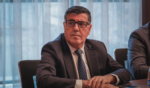
The chairman of the Serb List, Zlatan Elek, said on December 3 that the new mayors – Milan Radojević in North Mitrovica, Zoran Todić in Leposaviq, Dragiša Milović in Zvečan, and Miloš Perović in Zubin Potok – will request full access to all documentation once they take office.
The Serb List had also previously announced that it would annul the “illegitimate” decisions taken by the Albanian mayors in the north.
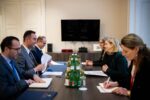
After the October local elections, the European Union told Radio Free Europe that it expects the new local authorities in northern Kosovo, in cooperation with central institutions, to “remain constructive in addressing the needs and demands of the population through institutions and in line with the law.”
The Law on Local Self-Government stipulates that any municipal decision or act that conflicts with the Constitution or laws can be subject to review by the supervisory body – in this case, the Ministry of Local Government Administration or another relevant institution of the Government of Kosovo.
What Has Changed Since 2023?
Immediately after taking office last year, the Albanian mayors placed the Kosovo flag on municipal buildings, which previously were not displaying it.
All four Serb-majority northern municipalities joined the Association of Kosovo Municipalities, while the Serb List called this an “occupation of the north.”
Later, in cooperation with central authorities, work began on closing Serbia’s local institutions, such as the Temporary Municipal Bodies, Centers for Social Work, public enterprises, and others.
Local authorities also took ownership of buildings used by Serbian institutions, blocked “illegitimate” Serbia-funded constructions, and announced the demolition of illegally built structures.
Meanwhile, new Kosovo institutions, service points, and banks were opened, and Albanian-owned businesses such as supermarkets, fast-food restaurants, and pastry shops began operating – actions that faced resistance and boycotts from the local Serb community.
This year, the Municipality of North Mitrovica signed a memorandum of understanding with South Mitrovica, providing for the construction of pedestrian and vehicle bridges over the Iber River, a project supported by the Government of Kosovo.
Clashes and Crises
The Serb-majority population did not accept the Albanian mayors, and multiple crises erupted. At the end of May 2023, when the Albanian mayors assumed office, clashes broke out between Serbs and NATO peacekeepers (KFOR) outside the Zvečan municipal building, injuring more than 100 people on both sides.
Tensions peaked with the armed attack in Banjska, Zvečan, when a group of armed Serbs killed a Kosovo police officer. Three Serb attackers were also killed. Milan Radoičić, former deputy leader of the Serb List, claimed responsibility for the attack, while Prishtina accused Belgrade of involvement – an accusation Serbia denied.
Since then, the political-level dialogue for normalizing relations between Kosovo and Serbia has been stalled.
Meanwhile, the EU – the mediator of the dialogue – imposed punitive measures on Kosovo in 2023 due to the escalation in the north. Some of these measures began to be lifted gradually in May this year. /RFE