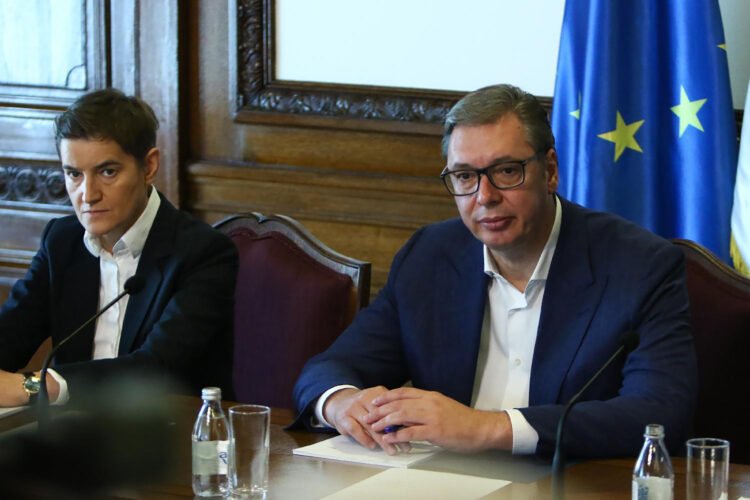
Serbian President Aleksandar Vučić and Speaker of Parliament Ana Brnabić falsely claimed they had not been informed about the upcoming visit of the European Parliament (EP) delegation to Belgrade from January 19–23. In reality, diplomatic protocol was fully followed: the Serbian embassy in Brussels was informed, and on December 23, the Parliament of Serbia received a Verbal Note detailing the delegation’s visit.
This information was later confirmed by EU rapporteur for Serbia, Tonino Picula, and Serbian MP Stefan Janjić from the SRCE party, forcing Brnabić to admit the truth.
Background
The visit of the EP delegation follows a resolution passed by the European Parliament condemning police violence against demonstrators, supporting citizens’ rights to peaceful protest, and criticizing the intimidation and arrests of activists in Serbia.
Despite this, the Serbian leadership initially refused to meet the EP delegation. Vučić reportedly “refused outright,” while Brnabić claimed the authorities had not been informed, learning about the visit only through Serbia’s EU embassy.
Confirmation of Notification
Documents later confirmed by Janjić prove that Brnabić and Vučić were indeed informed. The Verbal Note, registered under number 06-2768/25 on December 23, requested assistance in organizing meetings with the President, the Speaker, and parliamentary groups.
Brnabić then clarified in Parliament:
“They informed me on December 19 that they would come on January 23, uninvited, without consultation on the dates… This is disrespectful to our Parliament, our country, and our citizens.”
Diplomatic and Political Context
Former diplomat Srećko Đukić criticized the Serbian leadership for deliberately creating conflict with the European Parliament, sending the message: “Goodbye, Europe.” He added that the leadership’s focus on showing disrespect to EU procedures signals a political maneuver rather than a genuine diplomatic stance.
Vučić and Brnabić consistently emphasized only Tonino Picula, ignoring the other EP members, many of whom belong to the European People’s Party (EPP), to which the ruling SNS party is affiliated. Đukić interpreted this as a politically motivated narrative, labeling Picula as an “Ustaša” due to his Croatian origin, despite his Italian heritage.
Who is in the EP Mission?
The delegation visiting Belgrade includes:
- Rasa Juknevičiene, AFET Committee member, EPP group
- Reinhard Lopatka, AFET Committee member, EPP group
- Davor Ivo Stier, EP shadow rapporteur for Serbia, EPP group
This selective focus on Picula also reflects SNS’s precarious position within the EPP, which has been considering the party’s potential expulsion. Opposition politicians, including Borko Stefanović, suggest that the mission could directly question SNS representatives about Vučić’s alignment with extremist European groups rather than mainstream EPP positions.