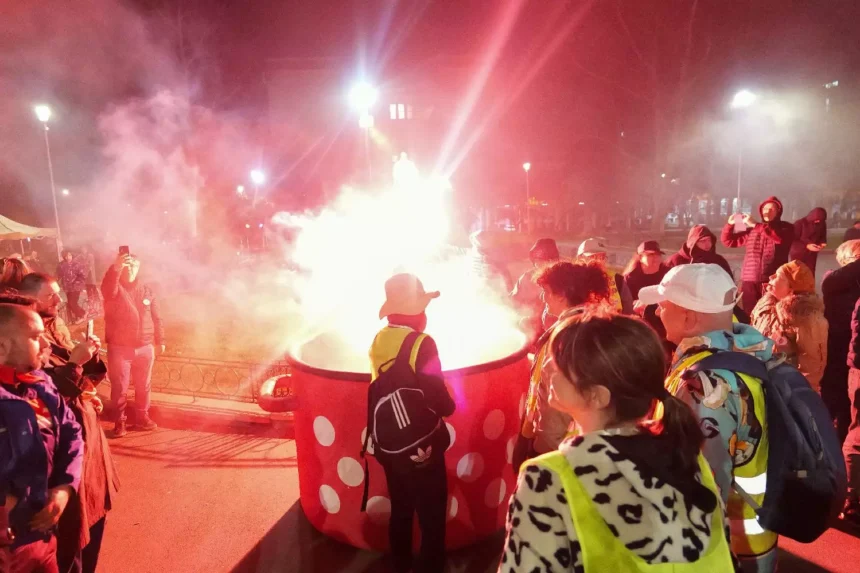
A preliminary study on the mental health of student protesters in Serbia suggests that while many participants face increased stress and anxiety due to pressure and violence, collective engagement and solidarity within the movement are also fostering resilience and personal growth.
The findings were presented at a discussion in Berlin ahead of the anniversary of the largest student and civic protest held in Belgrade on 15 March 2025. The event focused on the psychological impact of the protest movement, a topic researchers say has received far less attention than the political aspects of the demonstrations.
The research was conducted by a team from the Faculty of Philosophy in Belgrade and Novi Sad and the Faculty for Special Education and Rehabilitation in Belgrade. The preliminary results were based on responses from 664 protest participants surveyed in January and February this year.
Psychologists Sara Dojčinović and Ljiljana Mihić presented the initial findings, which reveal a complex picture of the movement’s psychological effects. Exposure to police and parapolice violence during protests and blockades is linked to higher levels of anxiety, depression, and symptoms associated with post-traumatic stress disorder.
However, the study also found that these negative effects are not the entire story. When participants experience strong social support, access to professional assistance, and a sense of collective purpose, they also report increased positive emotions and signs of post-traumatic growth.
Researchers say that difficult experiences do not always lead solely to psychological harm. Participation in collective action and the support of a broader community can help individuals build resilience and a stronger sense of meaning.
Psychologist Aleksandar Dimitrijević, who took part in the Berlin discussion, explained that a sense of control and purpose plays a crucial role in how young people cope with stress during political movements. According to him, individuals tend to feel psychologically stronger when they believe they can influence events rather than passively accept them.
Students involved in the protests also described the past year as both intense and inspiring. Some highlighted the importance of solidarity among protesters and support from ordinary citizens, including small gestures such as providing food or words of encouragement during demonstrations.
Researchers caution that the long-term psychological impact remains uncertain. While the protests have strengthened community bonds and personal motivation for many participants, continued political pressure and uncertainty about the movement’s outcome could still shape how students cope in the months ahead.