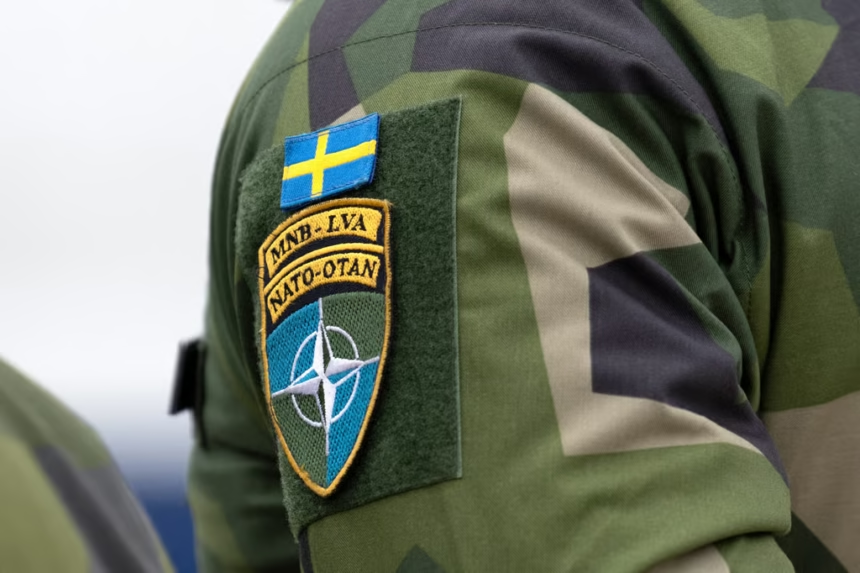
Sweden has identified Russia as its most significant security threat, warning that Moscow’s increasingly aggressive behavior risks triggering dangerous escalation across Northern Europe and the Baltic region.
According to Sweden’s annual intelligence assessment, released Tuesday by the country’s Military Intelligence and Security Service, Russia’s activities — including airspace violations, sabotage operations, and cyber warfare — demonstrate expanding hostile capabilities in Sweden’s neighborhood, particularly around the Baltic Sea.
The report states that Russia represents the primary military threat to both Sweden and the NATO, describing Moscow’s conduct as “opportunistic and aggressive.” Swedish officials warned that such actions reflect a broader strategy aimed at destabilizing European security structures.
Sweden’s warning follows a similar assessment from Estonia, whose Foreign Intelligence Service recently described Russia as dangerous despite operational shortcomings. However, the Estonian report also cautioned against panic, stating that there is currently no evidence suggesting Russia plans to attack Estonia or NATO within the next year, nor in the near future, citing strengthened European defense measures.
During a recent briefing attended by POLITICO, a senior NATO official echoed that view, emphasizing that the alliance’s collective defense principle under Article 5 remains a critical deterrent. The official also highlighted recent commitments by NATO member states to increase defense spending to 3.5% of GDP, describing the move as essential to maintaining strategic balance.
Despite these reassurances, both intelligence assessments noted that Russia has significantly expanded its military production capacity, particularly in artillery and ammunition manufacturing. Estonian analysts estimate that Russia’s shell production has increased seventeenfold since its full-scale invasion of Ukraine, which is now entering its fifth year.
Security officials warn that even if peace is eventually achieved in Ukraine, Russia is likely to remain militarily stronger than it was before the conflict, raising long-term concerns about regional stability and future security challenges across Europe.