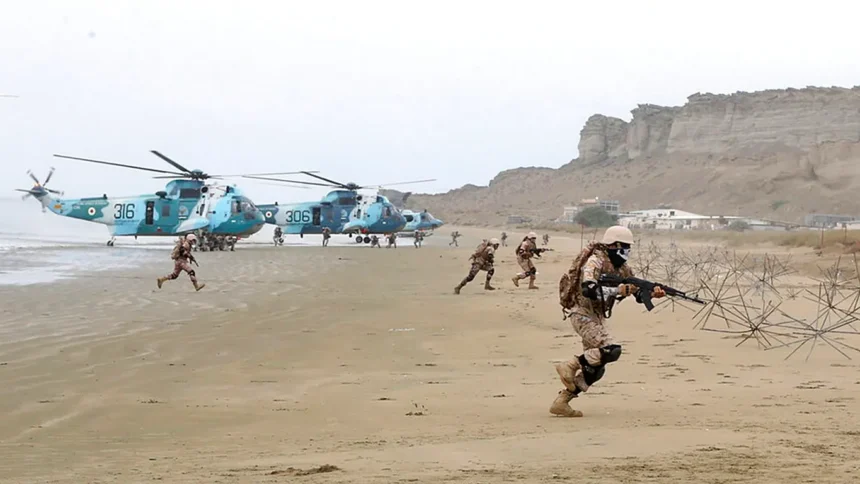
Iran temporarily closed the Strait of Hormuz and launched large-scale live-fire naval exercises, significantly escalating tensions with the United States even as diplomatic efforts continue to revive nuclear negotiations.
Iranian authorities confirmed that the Islamic Revolutionary Guard Corps (IRGC) began military drills early Monday across the Strait of Hormuz, the Persian Gulf, and the Gulf of Oman — all critical global shipping routes. The exercises included a temporary closure of the key maritime corridor, which serves as one of the world’s most vital oil transit passages.
Escalating Military Warnings
The drills mark the second live-fire exercise conducted by Iran in the strategic waterway in recent weeks, but the first instance of a temporary closure following recent U.S. threats of potential military action.
U.S. President Donald Trump has repeatedly warned that Washington may intervene militarily following Iran’s violent suppression of nationwide protests and ongoing concerns over Tehran’s nuclear programme. U.S. officials maintain that Iran may be seeking to develop nuclear weapons, allegations Iran strongly denies, insisting its programme is intended solely for civilian purposes.
Iran’s Supreme Leader, Ali Khamenei, issued a sharp warning during the drills, stating that Iran possesses the capability to destroy hostile warships, signaling Tehran’s readiness to respond to any military escalation.
Nuclear Negotiations Continue in Geneva
Despite heightened military tensions, the United States and Iran concluded a second round of indirect nuclear talks in Geneva on Tuesday, aimed at preventing open conflict and addressing concerns surrounding Iran’s nuclear ambitions.
Iranian Foreign Minister Abbas Araghchi, who is leading Tehran’s negotiating team, met with representatives of the International Atomic Energy Agency (IAEA) during the discussions. Araghchi emphasized Iran’s willingness to negotiate but rejected what he described as pressure tactics.
The current negotiations follow earlier indirect talks held in Oman, which served as a diplomatic channel between Washington and Tehran.
Protests and Human Rights Concerns
The latest tensions stem partly from widespread protests that erupted across Iran in late December 2025, triggered by a severe currency collapse and persistent hyperinflation. The demonstrations rapidly evolved into nationwide anti-government protests.
Human rights organizations have reported thousands of deaths and mass detentions during Iran’s crackdown on demonstrators, although exact casualty figures remain unclear due to strict information restrictions imposed by Iranian authorities.
Earlier this year, President Trump publicly encouraged Iranian citizens to continue protesting but later paused potential intervention after diplomatic talks resumed and Tehran reportedly pledged to reduce its crackdown.
Global Concerns Over Strategic Shipping Route
The temporary closure of the Strait of Hormuz has raised international concerns, as the narrow waterway is responsible for transporting a significant portion of the world’s oil supply. Any disruption to maritime traffic through the strait could trigger global energy market instability and heighten geopolitical tensions across the Middle East.
Diplomatic observers warn that while negotiations remain ongoing, the combination of military exercises and political rhetoric continues to push U.S.-Iran relations toward a critical turning point.