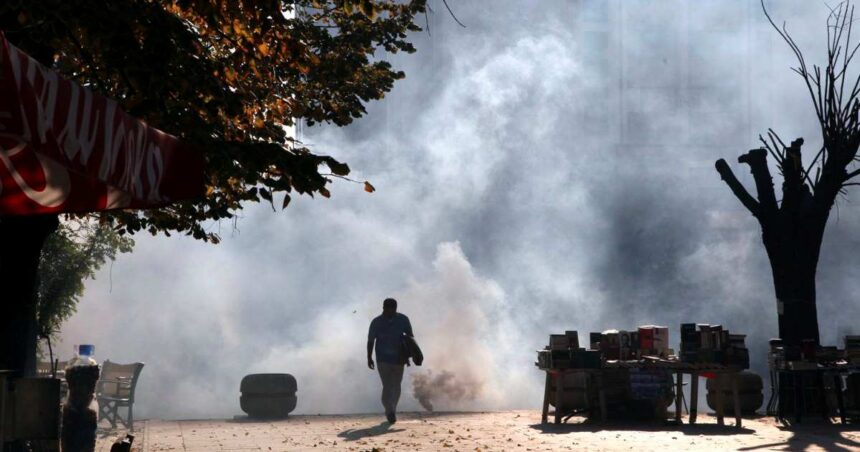
Twenty-two years after the March 2004 riots, the events are increasingly understood as part of a deliberate strategy to destabilize Kosovo and prevent its full statehood. Recent incidents—including the Banjska attack, the Ibër-Lepenc canal sabotage, and the dismantling of BIA-linked espionage networks—cast March 2004 in a broader political and strategic light. These events reflect a consistent logic in which security crises, infiltration, and orchestrated unrest are used to keep northern Kosovo contested.
Illegal Structures and Parallel Authorities (2000–2004)
After the 1999 war, Kosovo’s post-conflict landscape was shaped not only by institutional transitions and international missions but also by illegal Serbian structures, particularly in Serb-majority northern enclaves. Reports from the International Crisis Group (ICG) detailed Serbia’s financing and support of parallel institutions aimed at partitioning Kosovo.
These networks, such as the “Bridge Watchers,” were funded directly by Serbia’s Ministry of Interior (MUP) and operated in violation of UN Security Council Resolution 1244. The entrenched presence of these structures hindered UNMIK’s authority north of the Ibar River and reinforced Belgrade’s control, paving the way for de facto cantonization. ICG recommended conditioning international assistance to Serbia on the dismantling of these structures and warned that the persistence of parallel institutions threatened Kosovo’s political stability.
March 2004 Riots and Serbian Involvement
Human Rights Watch and other observers noted that the riots were preceded and facilitated by Serbia-backed institutions in the north. “Bridge Watchers” served as focal points for mobilization, while accounts from Serbian officials, such as Nebojša Čović, indicate pre-existing knowledge and coordination of events in Kosovo, including covert deployments under the guise of monastery protection.
Reports suggest that Belgrade used these disturbances to justify partition, claiming multiethnic governance was unworkable. Immediate post-riot proposals outlined the creation of autonomous Serb districts, constituting a de facto “Serbian Autonomous Community of Kosovo and Metohija.” These plans aimed to formalize division along ethnic lines and impede Kosovo’s progress toward sovereignty.
Political Exploitation and Continuity of Strategy
Belgrade’s efforts during March 2004 were part of a longer-term plan to maintain control over northern Kosovo, exploit security crises, and prevent consolidation of Kosovo’s statehood. The strategy included orchestrated violence, promotion of parallel structures, and the narrative of multiethnic failure, reinforcing arguments for partition.
Even after Nebojša Čović’s dismissal in 2005 amid allegations of misused funds, the underlying strategy persisted. Contemporary events show continuity: crises and provocations remain tools to destabilize Kosovo, impede its governance, and advance Serbia’s partitionist objectives.
Conclusion
Viewed across decades, March 2004 emerges not as an isolated episode of unrest but as a deliberate instrument of political strategy. Serbia’s partition agenda has been pursued through security crises, infiltration, and the manipulation of local tensions. Recognizing this continuity is essential to understanding Kosovo’s unresolved challenges and the persistent threats to its territorial integrity.