Serbian government officials claim that Cluster 3 in EU accession negotiations is “blocked” solely due to procedural errors involving the Venice Commission, but experts argue this explanation oversimplifies a much deeper issue: the lack of substantive reforms. Even if the controversial laws were repealed or amended, there is no indication from Brussels that Cluster 3 would automatically open. The problem, insiders say, is both a lack of political will and insufficient capacity to meet minimum EU standards.
Danijel Apostolović, head of Serbia’s EU Accession Operational Team, told RTS that the main obstacle for progress on Cluster 3 is the set of judicial laws recently passed by the Serbian parliament. The issue, he explained, is not only the content of the laws but also the procedure: Serbia failed to seek prior opinion from the Venice Commission or submit drafts to the European Commission on time.
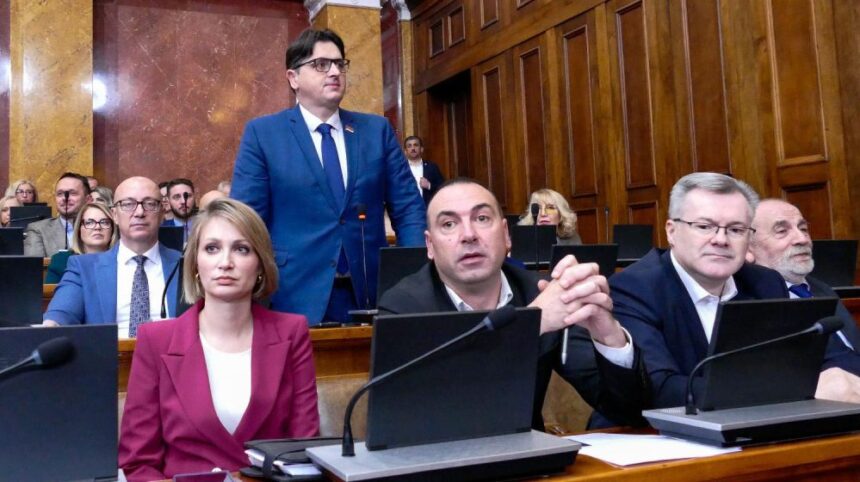
As a result, the Speaker of Parliament later requested an urgent opinion from the Venice Commission, which is expected to be presented at a plenary session in June. Meanwhile, the European Commission has repeatedly highlighted problems with the laws and requested their revision or withdrawal.
Experts emphasize that Cluster 3 is not blocked by external actors, but internally. Leo Beširi, director of the Institute for European Affairs, noted that while Serbia publicly maintains its “European path,” politically, the government has quietly undermined it. EU accession requires an independent judiciary, a strong fight against corruption and organized crime, resolution of political issues with neighbors (including Kosovo), and the dismantling of systems that perpetuate current power.
Beširi and others highlight Serbia’s chronic incapacity: executive power has long been filled with loyalty, nepotism, and mediocrity, sidelining expertise in favor of obedience. Even with genuine political will, the question remains: who in Serbia has the knowledge, integrity, and autonomy to implement deep reforms? Key reforms include real judicial accountability, anti-corruption measures, normalizing relations with neighbors, and strengthening institutions beyond individual leaders.
Marko Vujačić of the Green-Left Front adds that even before the controversial laws, Serbia had not met EU conditions to open Cluster 3, including aligning foreign policy with the EU, reforming regulatory bodies, and cleaning up the electoral roll. He argues that government claims blaming procedural errors are an attempt to distract from the lack of substantive reforms.
Branka Latinović, vice president of the Forum for International Relations, stresses that respecting acquis communautaire is non-negotiable and integral to lawmaking. Passing the controversial laws without Venice Commission input undermined Serbia’s EU path and illustrates how politics has overridden legal expertise.
Finally, Duško Lopandić, vice president of the Serbia Center, argues that the true priority for President Aleksandar Vučić and the ruling SNS party is staying in power. EU accession simulation serves mainly to “impress” Brussels, while domestic repression, media restrictions, and electoral manipulations continue. The Operational Team, he notes, is essentially a public relations effort to distract both Brussels and the Serbian public.