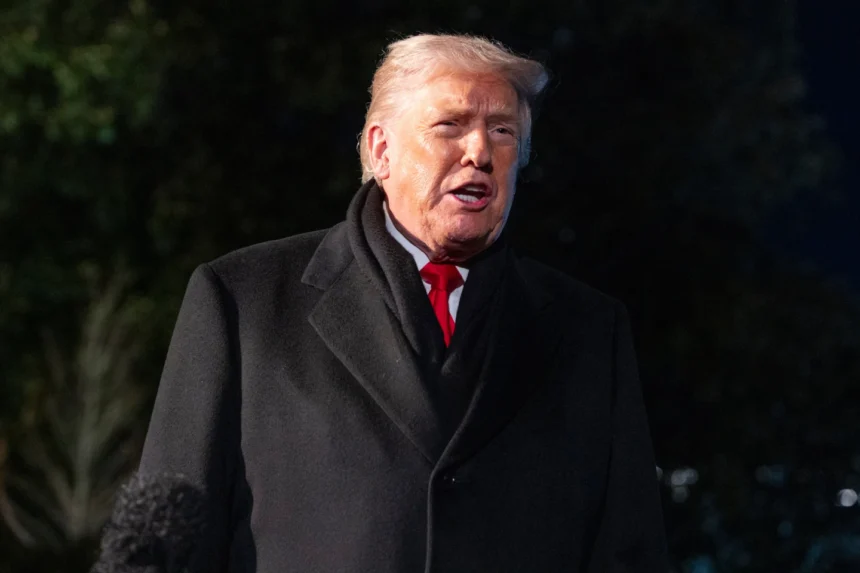
President Donald Trump is en route to the World Economic Forum in Davos, Switzerland, where his push to gain control of Greenland from NATO ally Denmark could strain relations with European partners and dominate his agenda at the global economic gathering.
Trump recently threatened tariffs of 10% next month, rising to 25% in June, on Denmark and seven other allies if they do not negotiate over Greenland, a semi-autonomous Danish territory. European leaders have indicated they are unwilling to comply. The tariff threat has already affected financial markets, with major U.S. indexes dropping and the dollar weakening.
In addition to trade tensions, Trump plans to use his Davos appearance to address affordability issues in the U.S., including housing costs, mortgage rates, and economic security, which are top priorities for American voters.
The White House also announced plans for Trump to promote the “Board of Peace,” a new international body intended to oversee the end of the Israel-Hamas war in Gaza, and potentially take on a broader global peace mandate. So far, fewer than ten leaders have accepted invitations to join the board, and several key U.S. allies, including the UK, France, and Germany, have declined or remained noncommittal. Trump has suggested that the board “might” eventually reduce the United Nations’ role, though he has expressed a desire for the U.N. to continue.
European leaders at Davos have voiced concerns. French President Emmanuel Macron emphasized the importance of upholding international law, while European Commission President Ursula von der Leyen warned that any retaliatory measures against Trump’s tariffs would be “unflinching, united, and proportional,” and highlighted the potential impact on last year’s U.S.–EU trade agreement.
Trump’s arrival in Switzerland was briefly delayed due to a minor technical issue on Air Force One, and his two-day visit comes amid heightened tensions with European allies and economic uncertainty.