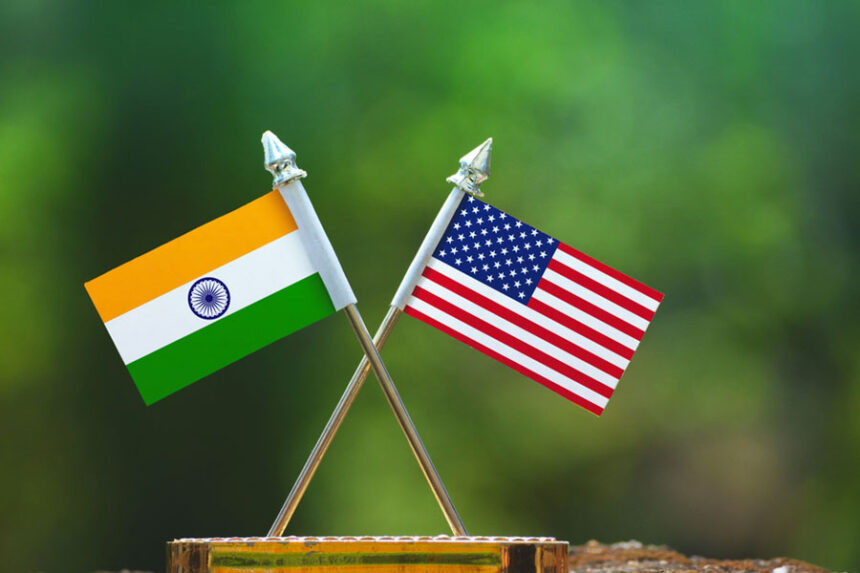
U.S. President Donald Trump has lifted the 25 percent penal tariff on Indian exports, stating that India has committed to halting the purchase of Russian oil, either directly or indirectly. However, New Delhi has not officially confirmed such a commitment, signaling possible tensions in the evolving U.S.-India trade relationship.
According to an executive order issued by the Trump administration, U.S. authorities will closely monitor India’s energy imports to ensure compliance. The order warns that if India resumes importing Russian oil, American officials will evaluate whether to reimpose the additional 25 percent tariff or implement further trade penalties.
When questioned about Trump’s claims, India’s Commerce and Industry Minister Piyush Goyal redirected the issue to the Ministry of External Affairs, which responded without directly confirming the U.S. president’s statement. The ministry emphasized that India’s primary objective remains ensuring energy security for its population of 1.4 billion people, adding that diversification of energy sources is guided by global market conditions and geopolitical developments.
India significantly increased its imports of discounted Russian Ural crude oil following Russia’s invasion of Ukraine, becoming one of Moscow’s largest buyers after China. Washington has previously criticized this trade, arguing that it indirectly supports Russia’s war efforts. Trump had earlier threatened to increase tariffs on Indian goods to 50 percent, citing concerns that Indian purchases of Russian oil were helping finance the Kremlin’s military campaign.
Recent data suggests a gradual decline in India’s reliance on Russian crude. According to energy research firm Kpler, India’s Russian oil imports dropped to approximately 1.1 million barrels per day in January 2026, marking the lowest level since November 2022. Analysts predict that the volume could decline further following the latest trade agreement between Washington and New Delhi.
However, experts believe that some Indian companies may continue importing Russian oil. Nayara Energy, a Gujarat-based refinery partly owned by Russian entities, is expected to maintain its purchases due to its ownership structure and operational requirements.
The trade developments also included a politically significant gesture from the United States. A map released by the Office of the U.S. Trade Representative depicted Jammu and Kashmir, including Pakistan-administered territory, as part of India, as well as the disputed Aksai Chin region claimed by China. The move is widely interpreted as a strong diplomatic signal supporting India’s territorial claims, potentially intensifying regional geopolitical sensitivities.
The evolving trade and energy dynamics highlight the growing complexity of global alliances, as the United States attempts to pressure Russia economically while balancing strategic partnerships with key countries such as India.