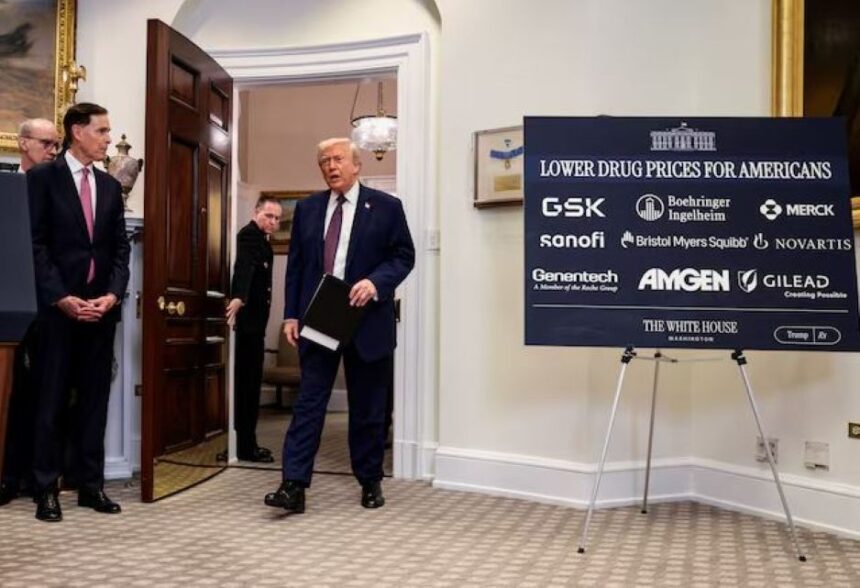
U.S. President Donald Trump announced on Friday a landmark agreement with nine major pharmaceutical companies aimed at significantly reducing prescription drug prices in the United States. The deal is expected to lower costs for Medicaid, which supports low-income Americans, as well as for patients who pay out of pocket.
According to the U.S. administration, the agreements will generate “massive savings” on some of the most commonly used medications, bringing U.S. drug prices closer to those in other wealthy countries. Currently, Americans pay up to three times more for prescription drugs compared to patients in other developed nations.
Key Elements of the Agreement
- New medications will be sold in the U.S. at prices comparable to those in other high-income countries, Reuters reported.
- Merck will reduce prices of its diabetes drugs Januvia and Janumet by up to 70% for American consumers.
- Pharmaceutical companies will invest more than $150 billion in research and manufacturing within the United States.
- Several firms will donate drug ingredients to the U.S. strategic medical reserve to strengthen national preparedness.
- In return, companies will receive a three-year exemption from import tariffs.
Pharmaceutical giants Pfizer, AstraZeneca, Eli Lilly, Novo Nordisk, and EMD Serono had already reached agreements earlier, while Regeneron, Johnson & Johnson, and AbbVie are expected to follow.
Broader Impact on the Market
Analysts note that Medicaid accounts for roughly 10% of total prescription drug spending in the U.S., but they emphasize that the price reductions are likely to influence the broader pharmaceutical market, potentially lowering costs beyond government programs.
The White House described the agreement as a major step toward correcting long-standing price disparities and easing the financial burden on American patients.