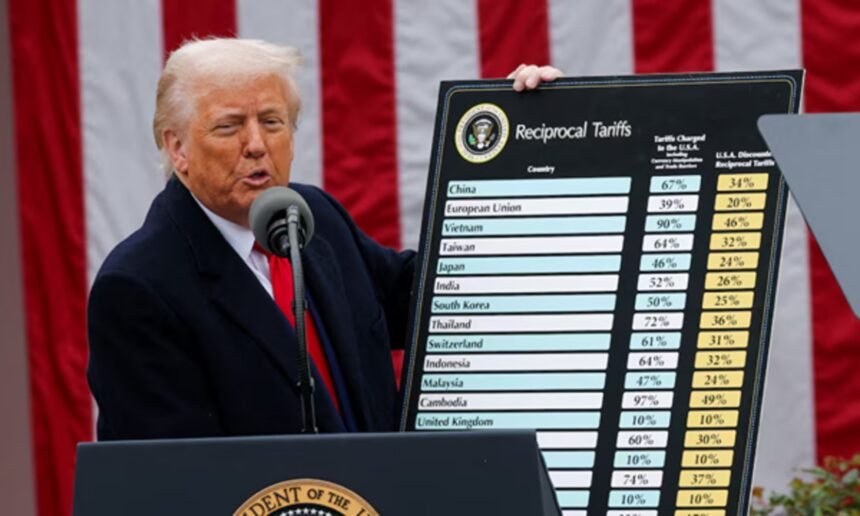
Donald Trump pledged to impose a 10 percent tariff on all imports into the United States after the Supreme Court of the United States ruled that he had exceeded his authority when introducing a series of sweeping tariffs that disrupted global trade.
In a 6–3 decision, the conservative-majority court determined that the International Emergency Economic Powers Act (IEEPA) “does not authorize the president to impose tariffs.”
Trump, who nominated two of the justices who ultimately ruled against him, responded sharply, alleging that the Court had been influenced by foreign interests.
“I’m ashamed of some members of the Court, absolutely ashamed, that they did not have the courage to do the right thing for our country,” Trump told reporters.
The U.S. president stated that he would rely on alternative legal authority to implement the proposed 10 percent tariff on all imports.
“In order to protect our country, a president can impose more tariffs, as I did in the past,” he said, insisting that the Court’s decision had effectively given him “more power.”
What Did the Supreme Court Say?
The Supreme Court ruled that Trump overstepped his authority by imposing broad tariffs under IEEPA. The justices emphasized in their opinion that the law contains no reference to tariffs or customs duties and therefore does not grant the president such powers.
Chief Justice John Roberts stated when announcing the ruling that “IEEPA makes no mention of tariffs or customs duties.”
The Court maintained lower court rulings that found the tariffs imposed under IEEPA unlawful. Three liberal justices joined three conservative justices in the majority.
The decision does not affect sector-specific tariffs previously imposed separately on imports such as steel, aluminum, and other goods.
Background on the Tariff Measures
After returning to the White House last year, Trump introduced wide-ranging tariffs affecting nearly all U.S. trading partners, including so-called “reciprocal” tariffs targeting what Washington described as unfair trade practices.
A 10 percent reciprocal tariff was imposed on Kosovo, along with other Western Balkan countries — some of which faced even higher rates. On August 1, Kosovo removed its 10 percent tariff on American goods.
The United States also introduced specific tariffs on major partners such as Mexico, Canada, and China, citing concerns related to drug trafficking and migration.
In its decision, the Supreme Court stated that if Congress had intended to grant the president explicit authority to impose tariffs under IEEPA, “it would have done so, as it has repeatedly done in other tariff statutes.”
Previously, in May of last year, a lower U.S. trade court had ruled that Trump exceeded his authority by imposing sweeping tariffs. However, that ruling had not been implemented after the government announced it would appeal.