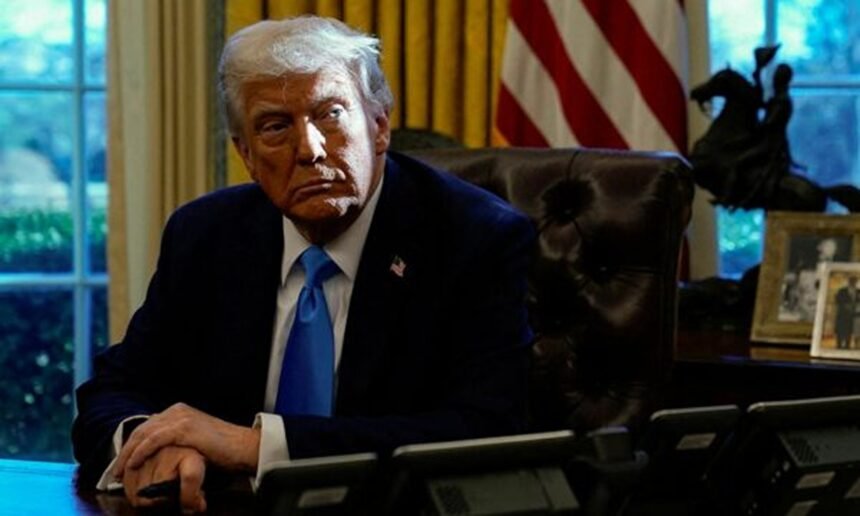
President Donald Trump rose to power largely on his immigration agenda. Now, that same agenda is creating a political dilemma.
After months of aggressive enforcement actions designed to signal toughness on one of the Republican Party’s signature issues, the White House has been forced to recalibrate its approach in response to widespread public backlash—particularly following the deaths of two protesters in Minneapolis at the hands of federal law enforcement.
This shift, however, presents a political tightrope. Scaling back on strict immigration enforcement risks alienating Trump’s core MAGA base at a time when Republicans cannot afford to lose support. Conversely, maintaining a hardline approach could alienate moderate Republicans, independents, young voters, and Latino communities, many of whom support immigration enforcement in principle but disapprove of its execution.
“I worry because if we lose the agenda, we’re done — and people don’t fully appreciate how big of an issue this is,” said Sean Spicer, Trump’s former press secretary. “With a narrow congressional majority, any misstep is risky.”
A midterms setback would leave the last two years of Trump’s administration consumed by Democratic obstruction, investigations, and possible impeachment inquiries, instead of advancing his agenda.
Recent polling underscores the delicate balance. About one in five Trump 2024 voters believe the mass deportation campaign is too aggressive, while more than one in three approve of the goals but disapprove of the tactics.
In Minneapolis, where the deaths of demonstrators Alex Pretti and Renee Good sparked national outrage, Trump’s administration has attempted damage control. Homeland Security Secretary Kristi Noem faced calls to resign, while border czar Tom Homan was dispatched to deescalate the situation. Homan indicated that federal operations would be more targeted moving forward, though the administration remains committed to deporting unauthorized immigrants involved in criminal activity.
White House spokesperson Abigail Jackson said:
“Our focus remains the same: prioritizing violent criminal illegal aliens while also enforcing the law — anyone who is in the country illegally is eligible to be deported. This includes the President’s calls for local leaders to cooperate in removing murderers, rapists, and pedophiles.”
Internally, some Trump allies worry that aggressive tactics could alienate swing voters in November. They advocate focusing on criminal arrests, public safety, and border security, which have broader voter appeal. Meanwhile, immigration hawks criticize the administration for overreacting to media coverage and donor concerns at the expense of its base.
“The optics of muscular enforcement invite confrontation,” said a White House insider. “We need to be quieter but still achieve the same number of deportations—more stealthy, less showy.”
Concerns remain that any perceived backtracking could further erode enthusiasm among a base already uneasy about economic conditions.
“Our base is not wealthy and struggling,” the insider added. “If they think he’s not serious about immigration, it’s bad news for the midterms.”
The situation highlights a rare vulnerability on Trump’s strongest issue, forcing the administration to navigate a complex political landscape ahead of the upcoming elections.