
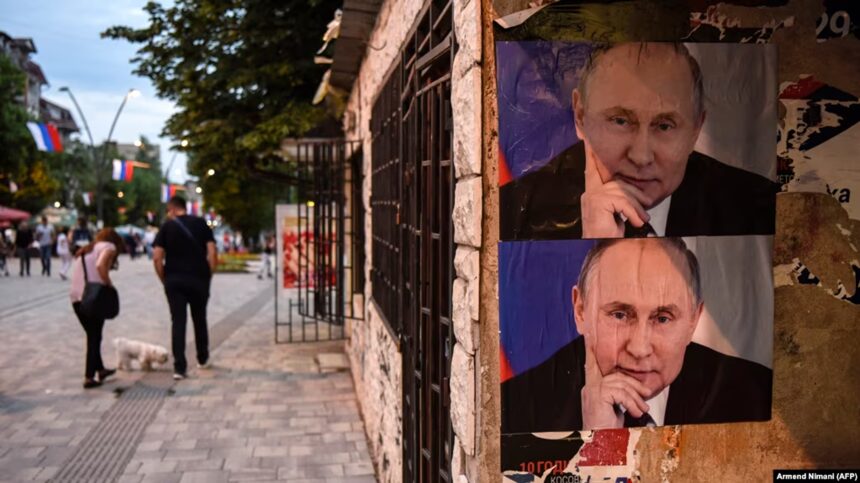
U.S. intelligence agencies warned in their latest annual report that the Western Balkans remains a region of heightened political tension and external influence, highlighting Russia’s role in destabilizing the area.
The report, titled “Annual Threat Assessment 2026” and published by the Office of the Director of National Intelligence, notes that the war in Ukraine has deepened divisions between the West and Moscow, which are also reflected in the Balkans.
According to the report, Russia “fuels instability between Serbia, which it favors, and Kosovo,” while also “supporting the separation of the Serb entity, Republika Srpska, from Bosnia and Herzegovina.”
U.S. intelligence assesses that ethnic and political divisions in the region remain pronounced and pose potential security risks, especially when combined with foreign influence.
The Western Balkans is described as a space where major power interests collide, with existing crises and unresolved disputes—including relations between Kosovo and Serbia, as well as internal political dynamics in Bosnia and Herzegovina—remaining primary sources of instability, according to the March 18 report.
The U.S. intelligence community also warns of broader threats across Europe, including political influence operations, disinformation campaigns, and efforts to undermine the security architecture, identifying the Balkans as a particularly sensitive area.
On a global scale, the report highlights rising competition among major powers, especially between the United States, China, and Russia, alongside the rapid development of cyberattacks and technologies that could be used to destabilize states.
The report also emphasizes risks from terrorism, organized crime, and the proliferation of weapons of mass destruction, which continue to present long-term security challenges.
It further notes threats from terrorism, particularly from individuals or small groups inspired by extremist ideologies acting without direct ties to organized networks.
Although the capabilities of large terrorist organizations have weakened, the risk of low-intensity attacks remains, including in Europe.