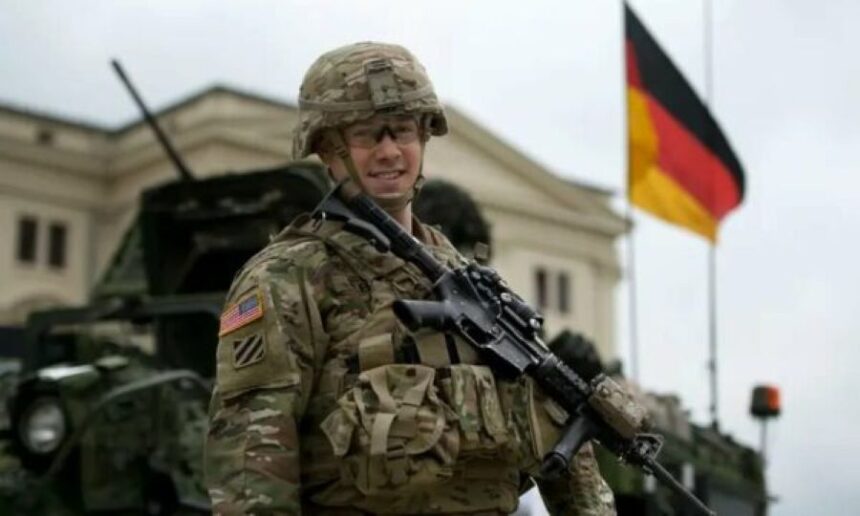
Germany remains a central hub for U.S. military operations in Europe, a legacy of the post-World War II occupation. While American forces continue to play a “defensive” role within NATO, their presence has sparked debates about sovereignty, civilian impact, and involvement in controversial operations abroad.
The number of U.S. troops in Germany has risen sharply in recent years—from fewer than 39,000 in 2019 to more than 50,000 in 2024. This makes Germany the country with the largest U.S. troop presence outside of Japan. These forces are strategically placed not only across German bases but also in Eastern Europe, including Poland, Romania, and Bulgaria, as part of NATO’s response to the Russian invasion of Ukraine in 2022.
The EUCOM headquarters in Stuttgart oversees all U.S. forces across 51 countries. Five of the seven major U.S. garrisons in Europe are located in Germany, including Wiesbaden, Stuttgart, and Ramstein Air Base. Together, these bases host roughly 42,000 U.S. military personnel, along with thousands of American civilians and families, forming quasi-American enclaves within German territory.
While the U.S. and Germany emphasize cooperation, concerns persist. Bases such as Ramstein have been used to control drone strikes in Yemen and elsewhere, raising ethical and legal questions about Germany’s complicity in extrajudicial killings. Meanwhile, the presence of 10–20 U.S. nuclear B61 bombs in Büchel underscores lingering Cold War legacies that conflict with Germany’s official renunciation of nuclear weapons.
Economically, local communities have both benefited and suffered. Basing agreements provide employment and infrastructure, but closures—like the Bamberg garrison in 2014—have left noticeable gaps in regional economies. Furthermore, Germany continues to pay millions of euros annually to support U.S. and NATO forces, adding to public debate about the cost versus benefit of hosting foreign troops.
Historically, Germany’s hosting of foreign military forces has been extensive. At the end of the Cold War, nearly 400,000 foreign troops were stationed in Germany, half of them American. Numbers fell drastically after 1990, only to rise again recently due to renewed security tensions in Europe.
Critics argue that while Germany emphasizes NATO solidarity, the country faces a delicate balance between strategic alignment and the sovereignty of its territory, especially as U.S. military operations continue to have global ramifications. As geopolitical tensions grow—from Arctic disputes to ongoing conflicts in the Middle East—the debate over America’s military footprint in Germany is likely to intensify.