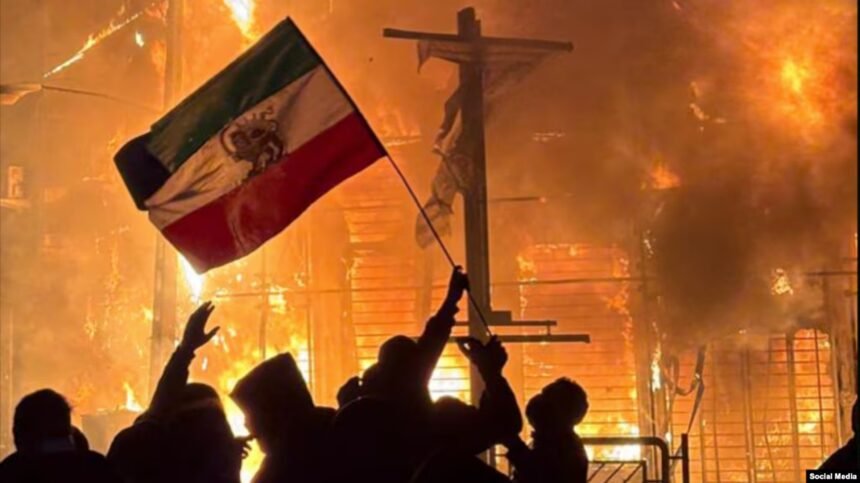
American warships are heading toward Iran as Iranian officials continue brutal suppression of anti-government protests, which the United Nations describes as the deadliest crackdown by the Islamic Republic on its own people since the 1979 revolution.
Following weeks of internet blackouts, information on the scale of the protests—which began with Tehran merchants protesting against rising inflation and the devaluation of the national currency—has emerged slowly. Human rights groups are gathering data from hospitals and eyewitnesses.
The U.S.-based Human Rights Activists News Agency (HRANA) reports that as of January 22, after 26 days of protests, 5,002 deaths have been verified, including 201 security personnel, while over 9,787 additional deaths are still under investigation.
Mai Sato, the UN Special Rapporteur on human rights in Iran, stated on January 22 that the number of civilians killed during the crackdown could exceed 20,000, as reports from doctors continue to surface.
During a UN Human Rights Council meeting on January 23, members expressed deep concern about:
- the unprecedented scale of violent suppression of peaceful protests,
- reports of extrajudicial killings including women and children,
- excessive and lethal use of force resulting in thousands of deaths and injuries among peaceful protesters.
U.S. President Donald Trump said on January 22 that the United States had a “fleet” en route to Iran but hoped it would not need to be used. He reiterated warnings to Tehran not to kill protesters and not to resume its nuclear program:
“We have many ships going in that direction, just in case. I would prefer nothing happens, but we are watching very closely… we have a fleet… going in that direction and maybe we won’t need to use it,” Trump told reporters aboard Air Force One while returning from the World Economic Forum in Davos, Switzerland.
The USS Abraham Lincoln aircraft carrier and several other missile-equipped warships are expected to arrive in the Middle East in the coming days.
Meanwhile, the U.S. Department of the Treasury announced sanctions on nine vessels that are part of what it calls Iran’s “shadow fleet”, which transports Iranian oil and petroleum products internationally in violation of sanctions.
“Today’s sanctions target a critical component of how Iran generates funds used to suppress its people. The Treasury will continue to track tens of millions of dollars the regime has stolen and is attempting to move to banks outside Iran,” said Treasury Secretary Scott Bessent.
In response, Iranian officials issued warnings:
- Mohammad Javad Haj Ali Akbari, a senior cleric leading Friday prayers in Tehran, said Iran would retaliate against any American attack, including targeting U.S. investments in the region.
- Ali Abdollahi Aliabadi, head of the Khatam-al Anbiya Central Headquarters coordinating the Iranian army and Revolutionary Guard, stated that any U.S. military strike would make all American bases in the region “legitimate targets.”
Since January 8, Iranians have been largely cut off from the outside world due to a near-total internet shutdown as authorities intensified the crackdown. Experts warn that even when services are restored, the government may force citizens to use a domestic internet independent of the global web.