Despite around 8,000 targets struck solely by U.S. forces, Iranian missiles and drones continue to attack neighboring countries.
Without an air force and without a navy, it is these missiles and drones that Iran seeks to protect by any means possible.
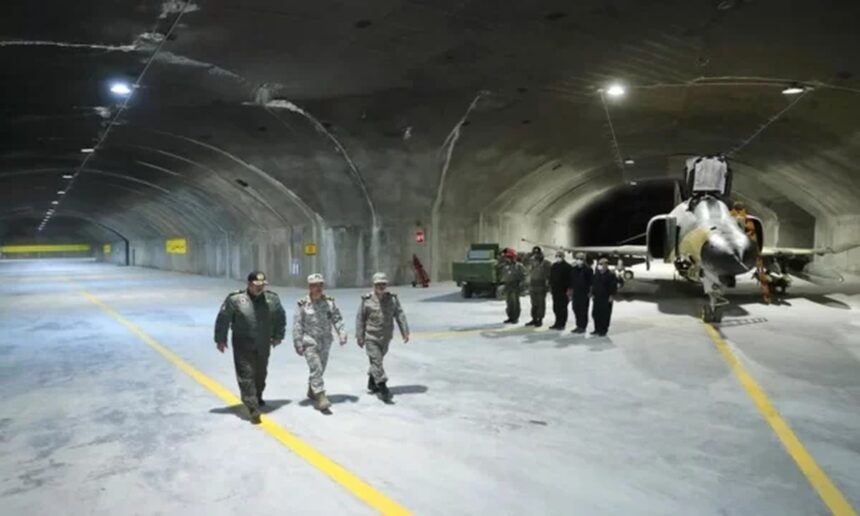
Iran’s topography and decades of planning mean that the stockpiles of these weapons are buried deep underground—or literally deep into mountain slopes.
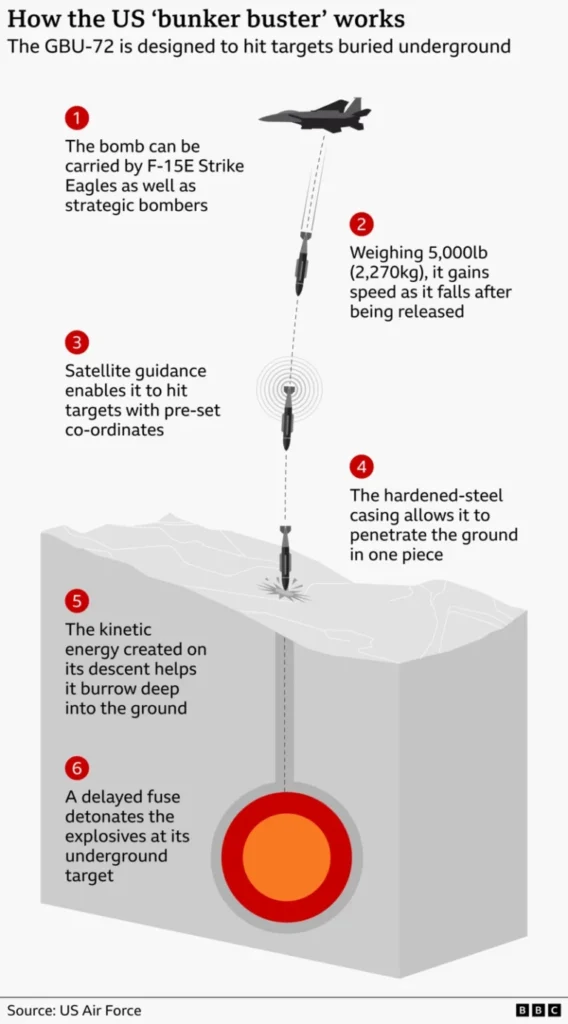
The distribution of weapons across these targets is challenging, which is why different types of bunker-busting munitions are used, including the 5,000 lb GBU-72 Advanced Penetrator, which was used this week, writes the BBC, as reported by Gazeta Express.
Last Friday, U.S. Secretary of Defense Pete Hegseth stated:
“The entire production capacity of Iran’s ballistic missiles, every company that builds any component of these missiles, has been functionally defeated, destroyed. Buildings, complexes, and factory lines across Iran have been destroyed.”
Even if the production facilities for these missiles are halted, what remains is clearly still being launched.
The U.S. and Israel will also focus on destroying mobile launchers, using intelligence and aircraft targeting pods to “find and destroy” them.
During the 1991 Gulf War against Iraq, many U.S. Air Force F-15E Strike Eagles and F-16 Fighting Falcons were tasked with finding and destroying Saddam Hussein’s Scud missiles, which were threatening Israel. These missions were called “Scud Hunting.” The same tactics are still being used today beyond the border.