The British Chamber of Commerce in Kosovo has issued an urgent appeal to improve railway safety across the country.
In a statement, the Chamber emphasized that Kosovo’s railway safety requires coordinated and sustainable national action, following repeated accidents at crossings and persistent infrastructure gaps compared to evolving European safety standards.
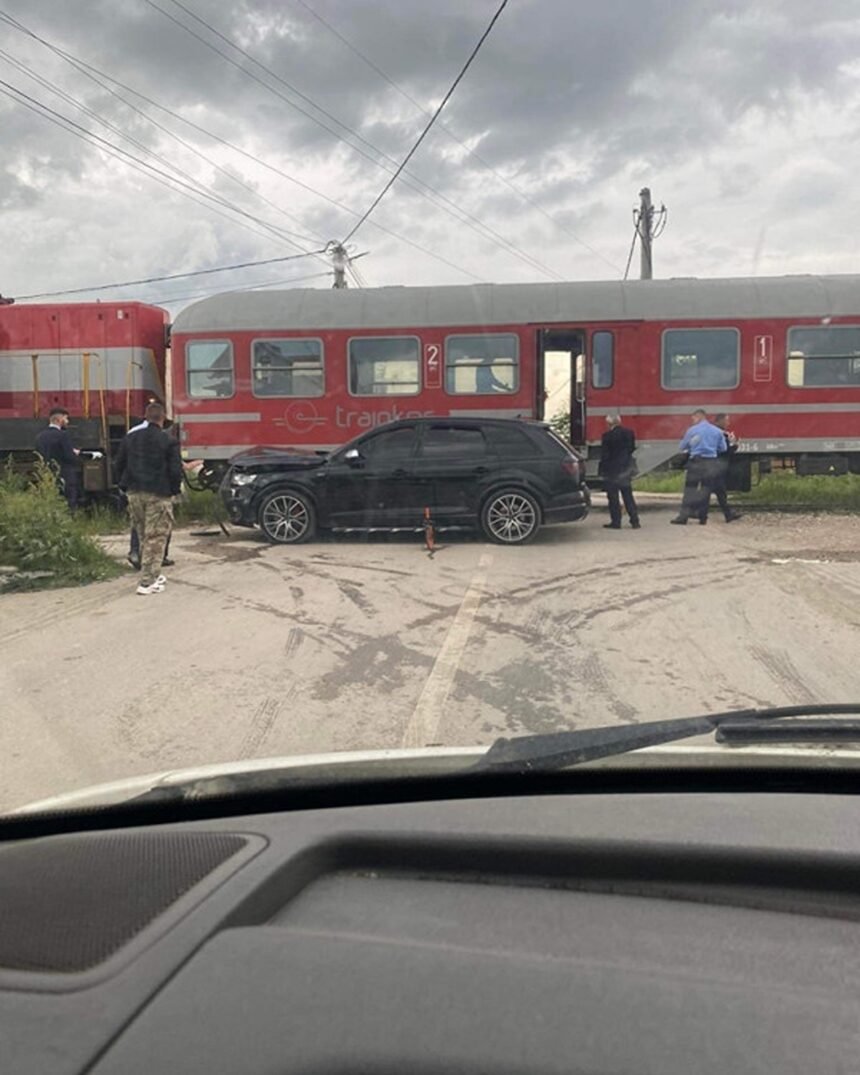
While consolidated official statistics on recent railway accidents have not yet been published, local reports highlight multiple incidents at crossings, including fatal collisions:
- In April 2025, a train collided with a vehicle in Jagodë, Klina, resulting in one death and three injuries.
- A recent accident in 2026 near the “Adem Jashari” Military Barracks close to Pristina saw a train strike a vehicle, resulting in the death of a Kosovo Security Force member.
“These incidents underscore the ongoing risks at railway-road intersections and highlight the urgent need for structural improvements,” the statement said.
Previous regional assessments, including those from the Transport Community, indicate that a significant portion of railway accidents in Kosovo occur at crossings. Of approximately 267 railway crossings nationwide, most remain passively protected, lacking automatic barriers, flashing lights, or audible warning systems. This share remains significantly higher than in many EU member states, where a larger proportion of crossings are equipped with active safety systems.
Coordinated National Action Needed
The British Chamber stressed:
“Improving railway safety is not just an infrastructure issue – it is fundamentally a public safety imperative. Reducing fatalities and serious injuries requires sustained political commitment, targeted investments, institutional strengthening, and adoption of proven European best practices.
By modernizing level crossings, upgrading signaling systems, reinforcing regulatory frameworks, and investing in professional competence, Kosovo can significantly reduce accidents, increase public trust, and progressively align with European railway safety standards.”