Bosnia and Herzegovina is moving closer to major US investments. Gas pipelines, gas-fired power plants, airport modernization, telecommunications, and a new stock exchange — all are multi-billion-euro projects that could reshape the country’s economic landscape.
This American push comes at a time when Chinese companies are increasingly involved in infrastructure projects across a region still heavily dependent on Russian energy.
In recent months, the US Embassy in Sarajevo has openly stepped up efforts to attract investors, emphasizing that there is a real economic and security interest backed by political support.
“American investments could ensure a breakthrough in key sectors, primarily in building infrastructure that would also attract other foreign investments,” Azra Haxhiahmetović, a professor at the Faculty of Economics in Sarajevo, told Radio Free Europe/Radio Liberty.
A Gas Pipeline Awaited for Two Decades
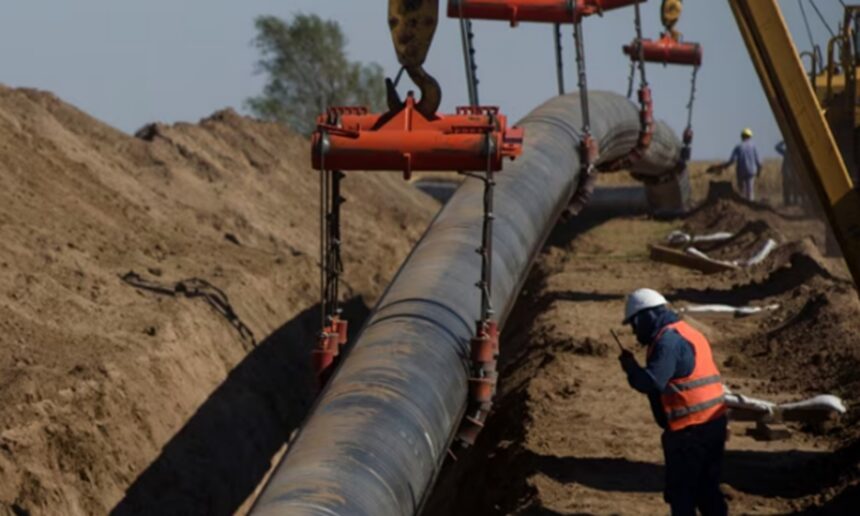
The strongest US interest in recent months has focused on the Southern Gas Interconnection project — a new pipeline from central Bosnia to the terminal on the Croatian island of Krk, first planned more than 20 years ago.
The pipeline would enable diversification of supply and reduce Bosnia and Herzegovina’s nearly 50-year dependence on Russian gas.
Interest in investing has been expressed by AAFS Infrastructure and Energy LLC, a US company founded at the end of last year. Its director is Jesse Binnall, a former member of US President Donald Trump’s legal team, while deputy director Joseph Flynn is the brother of Michael Flynn, Trump’s former national security adviser. They held talks with Bosnian authorities in mid-January.
The Bechtel Corporation has also expressed interest, with its representatives visiting Bosnia and Herzegovina as well.
Currently, Bosnia and Herzegovina gets less than five percent of its energy from gas, mainly used for heating in Sarajevo and several smaller cities, as well as for rail-related industry in Zenica.
Despite relatively low consumption, the project’s importance has been emphasized by members of the US Energy Dominance Council, including US Interior Secretary Doug Burgum and Energy Secretary Chris Wright, who discussed the issue with officials from Bosnia and Herzegovina and Croatia in Athens on November 7.
The pipeline would connect Bosnia and Herzegovina to Croatia’s network and the LNG terminal on Krk, where about 60 percent of the gas comes from the US, with the rest from the Middle East.
In the future, the Southern Gas Interconnection could link southward to the Trans-Adriatic Pipeline, planned toward Montenegro, Albania, and the Caspian region.
Gas-Fired Power Plants
American investors are also discussing the construction of gas-fired power plants in Mostar, Kakanj, and Tuzla.
Most electricity in Bosnia and Herzegovina currently comes from coal-fired plants, with the rest from hydropower and small amounts from solar and wind. The EU tax on “dirty energy,” introduced this year, is weighing heavily on export-oriented sectors.
Bosnia’s power plants are on average 40 years old, consume more coal, produce less energy, and often fail, forcing utilities to import electricity while operating at a loss.
New gas plants could ease the transition as Bosnia and Herzegovina has committed to fully closing coal plants by 2050.
Airport Concessions and Highways
US companies have also shown interest in concessions for Sarajevo Airport, owned by the Federation government, and Mostar Airport, owned by the city.
A Bechtel delegation visited Bosnia and Herzegovina in January 2026, meeting authorities and expressing interest in the Southern Gas Interconnection as well as highway construction.
Bosnia and Herzegovina has built about 250 kilometers of highways, compared to more than 1,300 km in Croatia and around 1,000 km in Serbia.
The Federation entity is building a north–south highway with European loans, while Republika Srpska, in addition to the Banja Luka–Doboj highway, is constructing shorter segments, largely built by Chinese companies.
Who Will Finance the Projects?
Support for these projects has come from the US Trade and Development Agency (USTDA), whose legal adviser Sam Kwon visited Sarajevo in mid-January.
USTDA does not invest directly but finances feasibility studies, technical preparation, and connections with US investors. According to USTDA data, US companies offer three main financing models:
- Public-private partnerships, involving a public entity and a US investor
- Build-Own-Operate (BOO) and Build-Operate-Transfer (BOT) models
- Turnkey (EPC) projects, where the US company designs and builds the project, often financed through loans
Bechtel has already used the EPC model in the region, building hundreds of kilometers of highways in Croatia, Serbia, North Macedonia, and Kosovo.
Although Bosnia and Herzegovina has two stock exchanges (Sarajevo and Banja Luka), the capital market remains underdeveloped. In October 2025, plans were announced to establish a new stock exchange in Brčko District, with US investors and local partners.
US representatives have also discussed telecommunications development, particularly 5G networks, already available in other Western Balkan countries.
Why US Investments Matter
Currently, most investors in Bosnia and Herzegovina come from Croatia, Serbia, Austria, Slovenia, Italy, Russia, and Turkey.
Potential US investments come as Russia is withdrawing from Serbia’s oil sector, with an uncertain future for the Zarubezhneft refineries in Brod and Modriča.
Realizing the announced projects would represent a strategic step toward energy diversification, infrastructure strengthening, and reducing China’s influence in the region.
“The potential is huge and there is a serious chance of success, given that the US has been Bosnia and Herzegovina’s key geopolitical partner since the Dayton Agreement in 1995 and a guarantor of political stability,” said macroeconomic analyst Faruk Hadžić.
Possible Obstacles
Bosnia and Herzegovina’s decentralization under the Dayton Agreement means economic powers are split among entities and cantons, slowing projects.
Large energy and infrastructure projects require approvals at multiple government levels, legal changes, international agreements, and alignment with EU standards.
“Still, I rely on long-term American persistence to resolve some internal issues in order to achieve their goals,” said Professor Haxhiahmetović.
So far, US investments in Bosnia and Herzegovina have been rare and mainly focused on the defense industry, such as Sitko Acquisition LLC, which invested in Pretis (Vogošća) and Binas (Bugojno), while the Federation government retains majority ownership. /RFE/RL