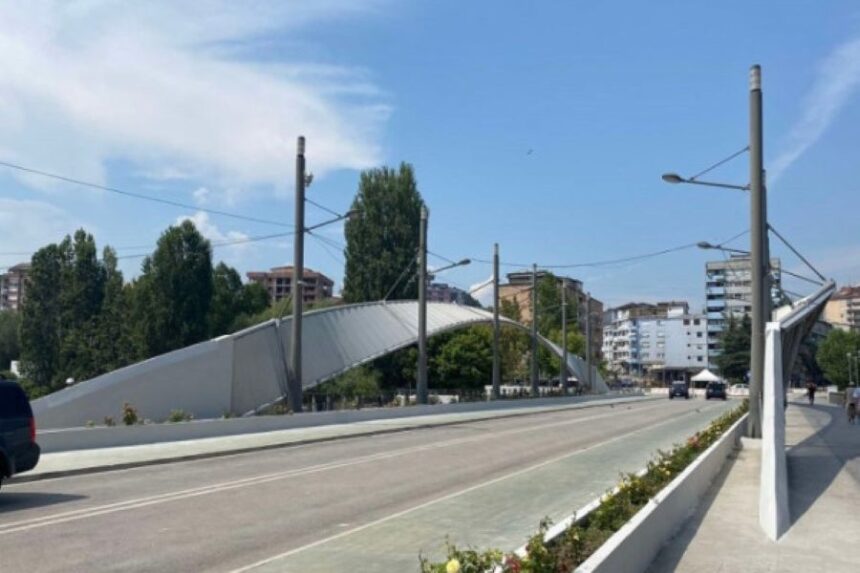
An incident that took place on January 6, 2026, in northern Mitrovica, involving the temporary confiscation and same-day return of an Orthodox Christmas banner by the Kosovo Police, was rapidly transformed into a wave of disinformation across Serbian media outlets and online platforms, according to a report by the US-based independent outlet The Kosovo Dispatch.
The banner, bearing the message “Peace of God, Christ is Born,” was briefly removed and later returned without any permanent ban, arrests, or legal violations, facts that were verified on the ground. However, within hours, numerous Serbian and regional media reports framed the event as a deliberate act of religious repression against Kosovo Serbs, significantly distorting the reality of the incident.
Disinformation Campaign Originated on Social Media
According to The Kosovo Dispatch, the false narrative initially spread on platform X, following a post by the account “NationalIndNews,” and was quickly amplified by Serbian-linked accounts and media outlets.
The account “serbnews” falsely claimed that the Kosovo Police had “torn down” or destroyed the banner, suggesting intentional damage to a religious symbol — an allegation for which no evidence exists.
“The original post by ‘NationalIndNews’ gained significant traction (over 700 likes and more than 190 reposts), and while an update about the banner’s return did circulate, coverage largely reflected Serbian nationalist or regional perspectives, with far less visibility from Kosovo-based accounts,” the report states.
Selective Reporting by Serbian Media
The report further notes that Serbia’s public broadcaster RTS, via its account @RTS_Vesti, reported on the Badnji Dan incidents by portraying police actions as a confiscation of Orthodox banners and symbols, while omitting the key fact that the materials were returned and religious expression was not permanently restricted.
Similarly, N1 Belgrade published multiple posts emphasizing the initial police intervention, while subsequent corrections received significantly less visibility. Other regional outlets, including Newsmax Balkans, reported on the alleged “ban” of the banner, creating the false impression of a permanent measure, despite the issue being resolved within hours.
Extreme Narratives and Propaganda Framing
One of the most extreme examples of disinformation, according to The Kosovo Dispatch, came from the US-based account “SerbNatlDef,” which described the incident as “the persecution of Serbian Christians by occupying Muslim Albanian police.”
This claim has no legal, factual, or institutional basis and was assessed as a clear attempt to inflame religious and ethnic tensions for propagandistic purposes.
Other users circulated out-of-context photos and videos, accusing Kosovo authorities of religious intolerance while ignoring documented evidence that the banner was publicly reinstalled without obstruction.
In several cases, footage of the banner’s return was misleadingly framed as the result of “public pressure,” without acknowledging that Kosovo institutions themselves corrected the situation.
Legal Reality vs. Media Narratives
According to the analysis, Kosovo law does not prohibit religious expression or the use of Orthodox symbols, and no official ban was ever imposed on the banner or religious attire. The report concludes that the core issue was the lack of immediate legal clarification during the police intervention, which created space for misinterpretation and manipulation.
However, The Kosovo Dispatch emphasizes that the subsequent disinformation was not the result of a lack of information, but rather editorial choices that favored narratives of victimization and political escalation.
“These narratives aimed to portray Kosovo as a state that suppresses religious freedoms, despite the facts and the final outcome of the incident clearly contradicting such claims,” the report concludes.
Broader Implications
The report warns that such coordinated misrepresentation contributes to heightened ethnic tensions and undermines factual discourse, particularly during sensitive religious events. It highlights the need for responsible reporting and rapid institutional communication to counter deliberate information manipulation.