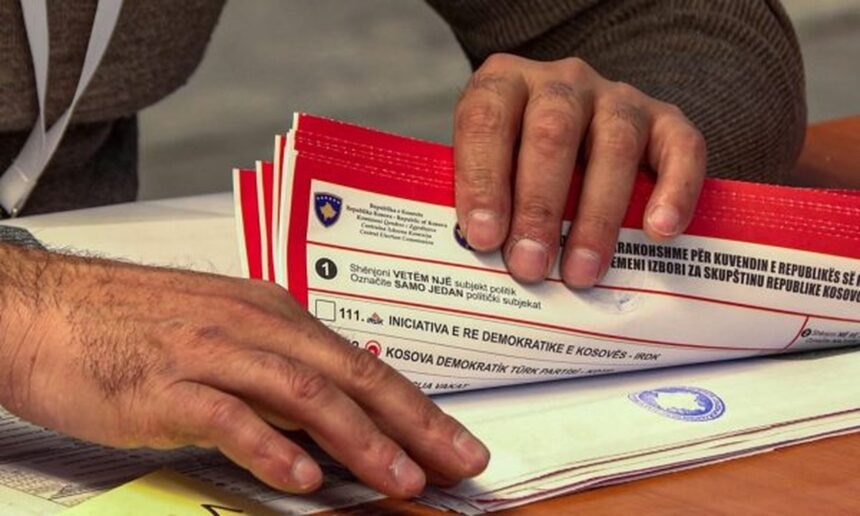
The vote recount process has significantly delayed Kosovo’s electoral timeline, raising concerns that constitutional deadlines—particularly for the election of the President—may be breached.
January 19 was initially set by the Central Election Commission (CEC) for the announcement of final results, but the ongoing recount has pushed this deadline back considerably. As a result, the certification of the December snap election results is also expected to be delayed, postponing the constitution of the Assembly and the formation of a new government.
In an effort to speed up the process, the CEC has increased the number of commissioners at the Vote Counting Center.
“We have added 10 additional counting tables, bringing the total to 20,” CEC spokesperson Valmir Elezi told Dukagjini, noting that the recount is expected to last approximately 12–14 days.
According to the Kosovo Law Institute (KLI), if the recount continues at this pace, the constitutional deadline for electing the President may be violated.
“Results could be certified between February 10 and 15, or even later if discrepancies are found and a full recount is ordered,” said Naim Jakaj of KLI.
“This would directly affect constitutional deadlines, especially for the presidential election, which must take place no later than March 5. If the Assembly is not constituted and the government is not formed by then, we risk entering an institutional deadlock,” he warned.
Jakaj stressed that failure to constitute the Assembly would paralyze key decision-making processes, with immediate consequences.
“The first two months of 2026 would pass without a state budget, leaving dozens of infrastructure projects unimplemented. There is also the electoral promise of a 13th salary, which has not been paid to 94,000 public servants, alongside stalled agreements related to the EU Growth Plan, the World Bank, sustainable funding for RTK, and four municipal budgets in northern Kosovo,” he explained.
Meanwhile, Eugen Cakolli from Democracy in Action said that a full recount appears inevitable, and that the presidential election could become the most problematic issue.
“There may be serious difficulties in securing enough votes for the President,” Cakolli said, adding that responsibility would likely be shared among all political parties. However, he noted that the election-winning party could be in a slightly more favorable position, as it would control the Speaker of the Assembly, the Prime Minister, and the acting President.
Under Kosovo’s Constitution, the President must be elected no later than 30 days before the end of the current presidential mandate.