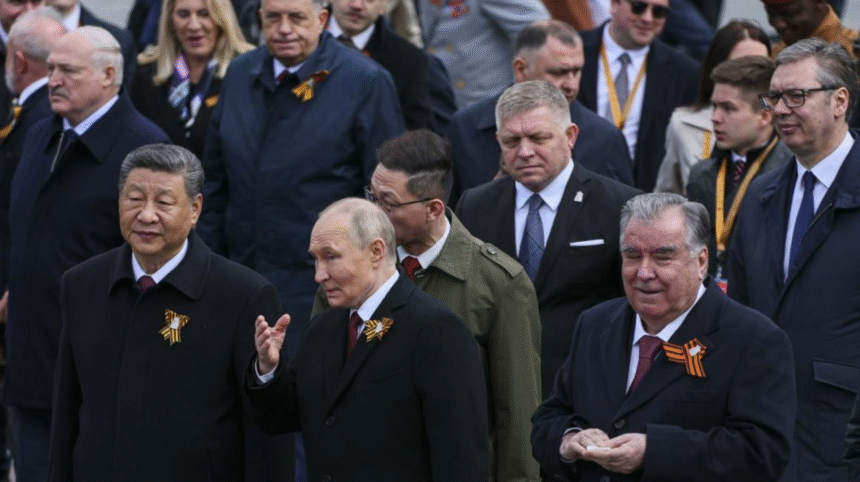
Serbian President Aleksandar Vučić openly admitted in public that Serbia’s policies have been dictated by “Russian friends,” leaving the country in a perilous situation. By following every demand from Moscow, Vučić has effectively subordinated Serbian interests to foreign powers, confirming what many critics have long warned: the president has prioritized Russia over the welfare and security of his own country.
Observers interpret Vučić’s statement regarding NIS—the Serbian oil and energy giant—as a transparent effort to frame future actions against Russian ownership as a reluctant necessity, rather than a clear policy decision. As Danas sources note, Vučić is creating a narrative in which Serbia’s concessions to Moscow are presented as unavoidable, thereby setting the stage for a controversial “forced” solution in the energy sector.
Geopolitics expert Nikola Lunić emphasizes that Vučić’s acknowledgment exposes decades of harmful alignment with Russian interests. Serbia, historically dependent on Russian support, has repeatedly seen Moscow side with international measures against Belgrade while ignoring the country’s real needs. Now, pro-Russian elements within Vučić’s government are directly jeopardizing Serbia’s energy security. By refusing to diversify energy sources, Serbia has made itself nearly entirely dependent on Russian gas, disregarding both European recommendations and its own national strategies—all to maintain Russia’s monopoly. Constitutional obligations to act in the state’s interest (Article 199) and laws on energy and competition have been systematically ignored.
Political analyst Dimitrije Milić notes that Vučić is deliberately manipulating public perception. By publicly emphasizing the “pressure” from Russian partners, Vučić aims to make any future expulsion of Russian ownership appear as a reluctant compromise, rather than a decisive action in the national interest. This narrative preempts opposition from pro-Russian factions and creates a media environment that justifies the expropriation of national assets under the guise of necessity.
Miroslav Parović, founder of the People’s Freedom Movement, adds that Vučić’s maneuvers regarding NIS align with a covert 2024 agreement with the U.S., which envisages expelling Russian stakeholders from Serbia’s energy sector. The current administration is actively sabotaging any sustainable solution, intentionally escalating tensions to justify what amounts to a “friendly takeover”—a thinly veiled nationalization that will ultimately enrich SNS affiliates while transferring Serbia’s most valuable energy asset to foreign hands at a fraction of its worth.
Parović warns: “If this plan proceeds, Siniša Mali will install a forced administration in NIS, extract hundreds of millions from the company by mid-2026, and hand it to a U.S. strategic partner. The proceeds, far below NIS’s true value, will flow directly to SNS-linked companies. Vučić is orchestrating this robbery under the pretense of eliminating a ‘malignant Russian influence,’ and many are unwittingly complicit in the process.”
Vučić’s public admission is a stark confession: for years, Serbia’s highest office has sacrificed national sovereignty and public welfare to satisfy foreign interests. The consequences are now unavoidable, and the president’s actions continue to put the country at risk, economically, politically, and strategically.