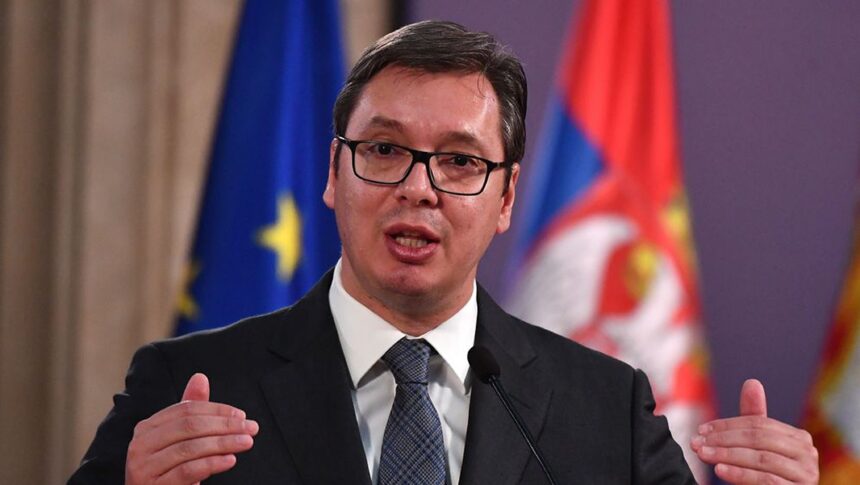
Serbian President Aleksandar Vučić announced on December 20 via social media that “long and important talks regarding Serbia’s energy stability” have taken place, claiming they bring the country “one step closer to resolving an extremely complicated situation.” Yet, the reality paints a very different picture.
Despite his optimistic statements, Vučić has only secured temporary supplies of oil, kerosene, fuel oil, and gasoline—enough reportedly until January 15. His assurances rely heavily on ongoing negotiations with foreign entities and the hope of obtaining an operational license from OFAC, the US Office of Foreign Assets Control, which has sanctioned Serbia’s largest oil company, NIS, since early October due to Russian ownership.
Vučić’s narrative sidesteps the fact that NIS remains 56.2% Russian-owned, leaving Serbia dependent on Moscow and vulnerable to international sanctions. The Pančevo refinery has been closed since early December, and official statements from Belgrade about “talks with Moscow to change ownership” remain vague and unconvincing.
On December 16, Vučić admitted that the negotiations involve only the Russian side and a major company, while Serbia itself does not participate directly—raising questions about his actual influence over the situation. Meanwhile, Russian President Vladimir Putin stated on December 19 that Russia “has ideas” for resolving NIS’s issues, further highlighting Serbia’s reliance on Moscow rather than any domestic initiative.
Vučić continues to present himself as the architect of a solution, yet the energy crisis in Serbia is effectively dictated by Russia. The US sanctions on NIS aim to prevent Moscow from financing its invasion of Ukraine—yet Vučić’s handling of the situation exposes Serbia as increasingly entangled in Russian interests, leaving citizens dependent on unstable energy supplies.
Instead of taking decisive action to reduce Russian influence, Vučić persists in giving empty promises and orchestrating talks that leave Serbia in a precarious position, all while trying to portray himself as “one step closer” to solving a crisis largely caused by his government’s failure to diversify energy sources.